




Nigeria Not Bothered About Trump’s Tariffs, Trade Policies – Tinubu | Citizen NewsNG
 Citizen NewsNG
3 min read
Citizen NewsNG
3 min read
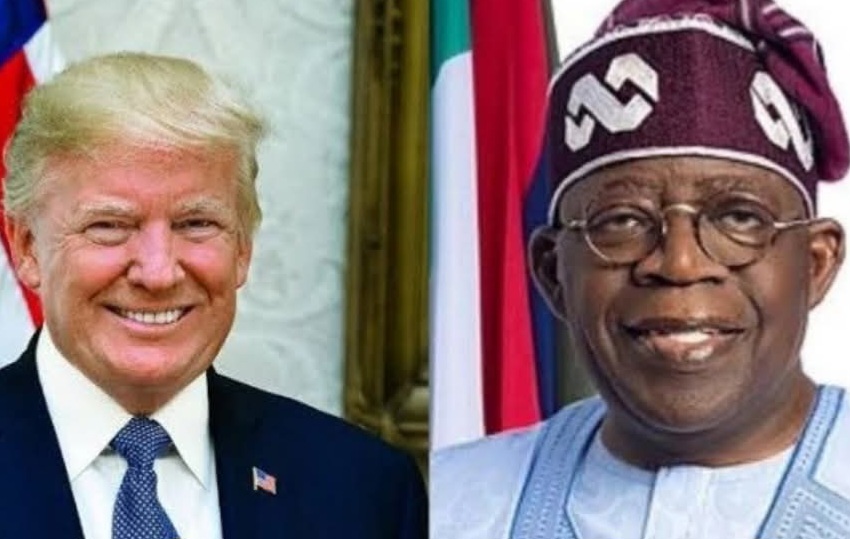
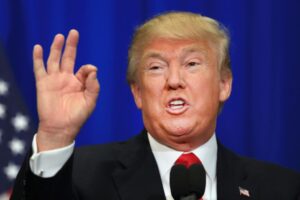
President Bola Tinubu has claimed that Nigeria’s economy is not moved by whatever trade policies the United States president, Donald Trump, has brought or plans to bring.
Tinubu, on Tuesday, told visiting members of The Buhari Organisation (TBO) led by former Nasarawa governor Tanko Al-Makura that his government revenue inflows had remained steady despite global economic pressures.
According to him, Nigeria even met its revenue target for the entire year as early as August, eliminating the need for domestic borrowing.
He further dismissed concerns over U.S. President Trump’s tariff policies, stressing that Nigeria’s economy was “on the right path to prosperity.”
“The fear of where we are going? We know the direction that we should go; we are going higher.
“Today, I’m standing before you, and I can brag that Nigeria is not borrowing a dime from a local bank.
“We have met our revenue target for the whole year; we met it in August, non-oil. If the non-oil revenue is doing well, then we have no fear of whatever Trump is doing.”
In August, United States president, Donald Trump, officially imposed a 15 percent tariff on imports from Nigeria and several other African countries.
The White House announced the new tariff rates in an executive order.
The Executive Order, titled “Further Modifying the Reciprocal Tariff Rates,” said: “These modifications shall be effective with respect to goods entered for consumption, or withdrawn from the warehouse for consumption, on or after 12:01am.”
In April, former President Donald Trump imposed a 14% tariff on imports from Nigeria, citing the need to establish fairer trade practices.
A 90-day grace period was granted to allow for bilateral negotiations, setting August 1 as the deadline for reaching new trade agreements.
Despite intensive discussions, most of the negotiations failed to produce concrete outcomes.
As a result, the new tariff rates have now come into effect, with Nigeria among several countries facing increased duties under the revised U.S. trade policy.
Efforts by African nations, including Nigeria, to secure individual trade deals with the United States ultimately fell short.
Meanwhile, during the negotiation period, Trump also reinstated travel restrictions on several African countries. Nigeria, initially excluded, was later added to the list as the policy expanded.
Nigeria’s Minister of Foreign Affairs, Yusuf Tuggar, expressed West Africa’s desire to deepen trade relations with the U.S. but cited the reimposed travel restrictions as a significant obstacle.
Under the revised tariff schedule:15% – Afghanistan, Angola, Bolivia, Botswana, Cameroon, Chad, Costa Rica, Côte d\\`Ivoire, Democratic Republic of the Congo, Ecuador, Equatorial Guinea, Fiji, Ghana, Guyana, Iceland, Israel, Japan, Jordan, Lesotho, Liechtenstein, Madagascar, Malawi, Mauritius, Mozambique, Namibia, Nauru, New Zealand, Nigeria, North Macedonia, Norway, Papua New Guinea, South Korea, Trinidad and Tobago, Turkey, Uganda, Vanuatu, Venezuela, Zambia, Zimbabwe.
For Advert, Event Coverage/Press Conference Invite, Story/Article Publication & Other Media Services
Contact Us On WhatsApp
Send Email To: citizennewsng@gmail.com
Visit Citizen NewsNG To Read More Latest and Interesting News Across Nigeria and the World