






Total Lunar Eclipse To Light Up Nigerian Skies Sunday Night | Citizen NewsNG
 Citizen NewsNG
2 min read
Citizen NewsNG
2 min read
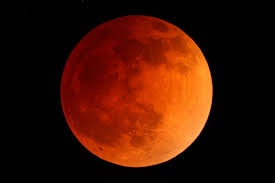
Nigerians and viewers across several African nations are in for a breathtaking sight this Sunday evening as a total lunar eclipse, commonly known as a “blood moon” is set to paint the night sky a glowing red.
And the best part is viewers can safely watch it with naked eyes, no protective gear required.
According to NASA, a lunar eclipse happens when the Earth aligns perfectly between the Sun and the Moon, casting its shadow across the lunar surface.
Unlike solar eclipses, which require special glasses to prevent eye damage, lunar eclipses pose no health risks to viewers.
“Lunar eclipses can be viewed safely with the naked eye,” the space agency confirmed.
In Nigeria, the eclipse will begin around 8:00 p.m. West Africa Time and is expected to last approximately 83 minutes. During this period, the Moon will gradually shift to a deep red hue, a result of Earth’s atmosphere bending sunlight around its edges before it hits the Moon.
This same atmospheric scattering is what gives the Moon its eerie crimson glow during the event.
The phenomenon will be visible across much of West and Central Africa, including Ghana, Cameroon, Gabon, Equatorial Guinea, Benin, Togo, Niger, Chad, and São Tomé and Príncipe.
However, some parts of the westernmost regions may miss the early phases due to late moonrise.
Scientists emphasize that the red color, often dubbed a “blood moon”, is a completely natural effect and part of the wonder of a total lunar eclipse.
“This transformation is a normal result of atmospheric refraction,” experts explain.
The eclipse won’t just be limited to Africa. Skywatchers in Europe, Asia, and Australia will also catch a glimpse, making this a global astronomical event not to be missed.
So, step outside, look up, and enjoy a safe and spectacular show, no telescope or glasses needed.
For Advert, Event Coverage/Press Conference Invite, Story/Article Publication & Other Media Services
Contact Us On WhatsApp
Send Email To: citizennewsng@gmail.com
Visit Citizen NewsNG To Read More Latest and Interesting News Across Nigeria and the World