





 Citizen NewsNG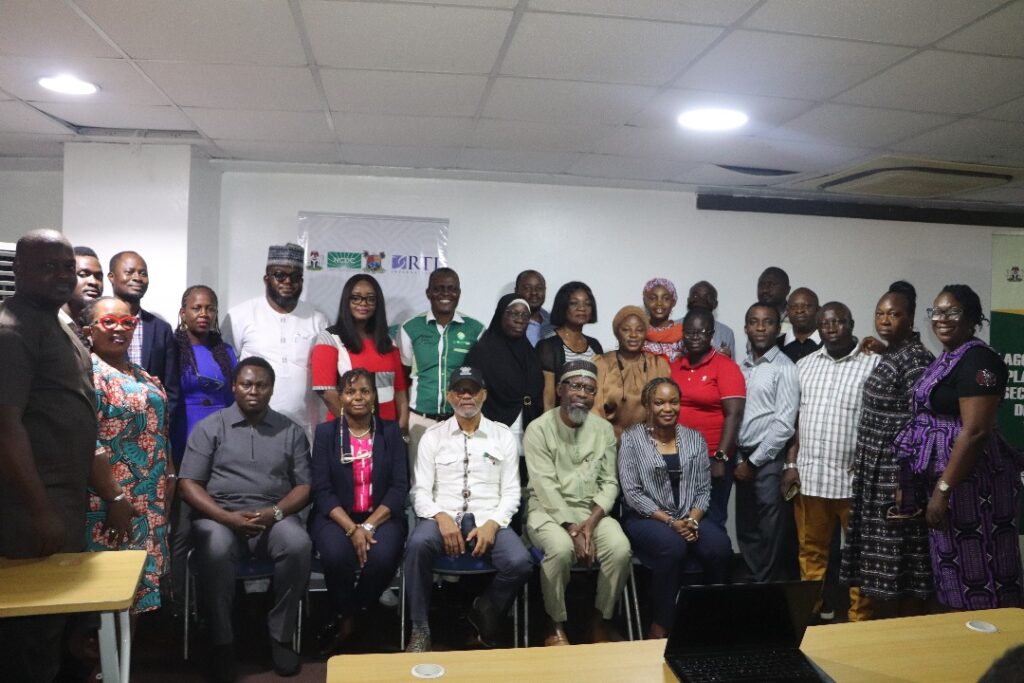
Lagos State today concluded its intensive five-day State Action Plan for Health Security (SAPHS) development workshop, with the Commissioner for Health, Prof. Akin Abayomi, declaring that Lagos must remain in a permanent state of readiness for emerging biological threats. The workshop, held at the Lagos Chamber of Commerce and Industry between Monday 24th and Friday 28th November, 2025, brought together onehealth stakeholders from Lagos and experts from NCDC, US CDC, Research Triangle Institute (RTI), Resolve to Save Lives, and other partners to craft Lagos’ five-year health security roadmap.
Prof. Abayomi, who addressed participants during his visit to the workshop, said Lagos had learned difficult but vital lessons from Ebola, COVID-19 and the most recent cholera outbreak. According to him, the state’s experience proved that strong biosecurity cannot exist without a resilient health system capable of responding decisively to threats.
He emphasised that crisis communication and confidence are crucial in public health emergencies, recalling how government leadership during COVID-19 helped prevent panic and civil unrest. He noted that once confidence breaks, outbreaks become secondary to social disorder, stressing the need for coordination among MDAs during emergencies.
The Commissioner warned that high-consequence pathogens, especially “Pathogen X”, remain a global concern, adding that many have no treatment or vaccine in the early stages. He said the world still struggles to distinguish between natural outbreaks and potential biological weapon threats, underscoring the need for Lagos to strengthen containment laboratories and emergency response systems.
Prof. Abayomi added that Lagos must invest continuously in surveillance, oxygen capacity, public health infrastructure, and workforce retention, saying readiness is expensive but unavoidable. “You cannot train your army during war; you train during peace,” he said, assuring participants that Lagos will continue building a unified health security shield for its citizens.
Deputy Director of the Nigeria Centre for Disease Control and Prevention (NCDC), Dr. Olubunmi Olofa, said the agency was pleased with Lagos’ commitment to translating its Joint External Evaluation (JEE) findings into a concrete five-year SAPHS. He recalled that Lagos scored 36 during the 2024 JEE assessment, describing it not as a failure but a true reflection of the state’s capacity at the time.
He stressed the need for dedicated budget lines to implement the action plan and expressed optimism that Lagos would record significant improvements within the next two to three years when a follow-up evaluation is conducted.
Director of Epidemiology, Biosecurity and Global Health, Dr. Ismail Abdus-Salam, said the workshop was long overdue, noting that conflicting schedules had delayed the exercise for more than a year after the JEE. He expressed confidence that the collaboration among stakeholders would produce well-costed, achievable and sustainable strategies.
He announced that the Lagos Public Health Emergency Operations Centre (PHEOC) is now better staffed and undergoing major refurbishment, adding that further upgrades would position it to function fully as a modern emergency coordination hub.
Project Manager of RTI’s Global Health Security Agenda Nigeria, Dr. Olusola Abioye, described Lagos as a critical point for global health security due to its international travel connections and high population density. He said the SAPHS development process would strengthen Lagos’ ability to prevent, detect and respond to outbreaks over the next five years.
He added that the workshop, supported by the U.S. CDC and partners such as the World Bank and Resolve to Save Lives, presents a vital opportunity for Lagos to create a focused and forward-looking strategic health security plan.
Principal Advisor at Resolve to Save Lives, Dr. Jenom Danjuma, commended Lagos for demonstrating strong political will and refusing to inflate its performance scores to appear better than the facts. He noted that Lagos’ willingness to acknowledge gaps puts the state on a credible path to progress.
Dr. Danjuma said the state’s score of just over 30 per cent during last year’s assessment could rise significantly within four to five years, especially with continued investment and leadership. He expressed confidence that Lagos could replicate or surpass the improvement seen at national level, where scores rose from the 30s in 2017 to over 50 per cent five years later.
Throughout the workshop, participants from multiple sectors; health, environment, agriculture, emergency management and others, engaged in technical sessions to outline strategies for strengthening surveillance, laboratory systems, risk communication, emergency operations and response capabilities.
As the workshop closed, stakeholders resolved to finalise the SAPHS document and prepare the 2026 operational plan that will guide implementation. They emphasised the need for multidisciplinary collaboration across human, animal and environmental health.
The Lagos State Ministry of Health reiterated that the outcomes of the workshop will shape its health security agenda for the next half-decade and ensure that the state remains vigilant against infectious disease threats.
For Advert, Event Coverage/Press Conference Invite, Story/Article Publication & Other Media Services
Contact Us On WhatsApp
Send Email To: citizennewsng@gmail.com
Visit Citizen NewsNG To Read More Latest and Interesting News Across Nigeria and the World