






 Citizen NewsNG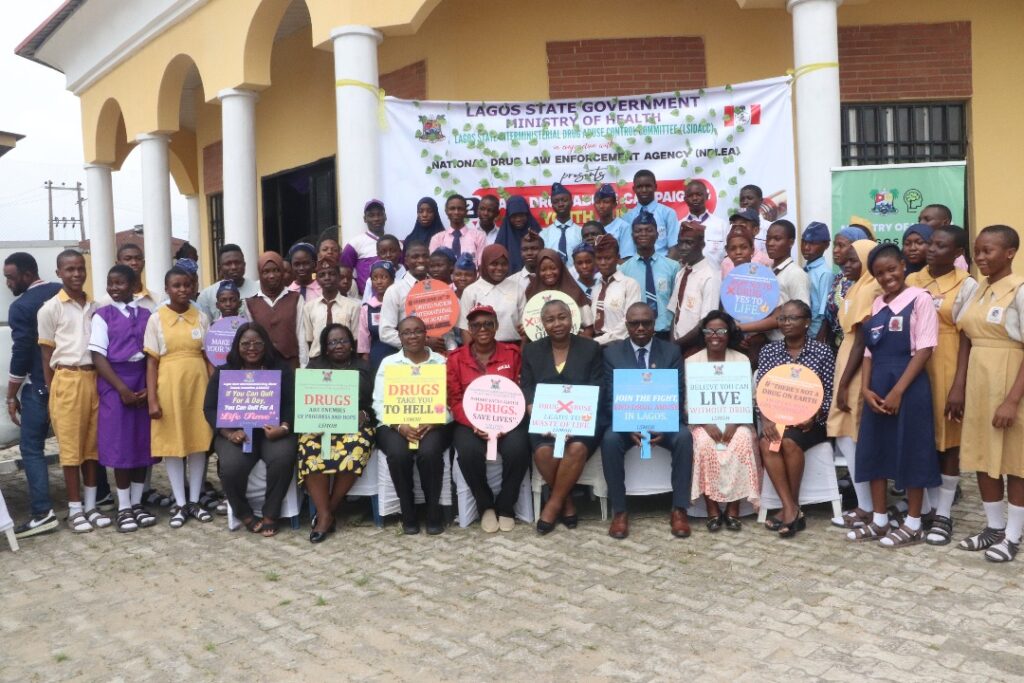
In a renewed push to stem the alarming rise in drug and substance abuse among young people, the Lagos State Interministerial Drug Abuse Control Committee (LSIDACC), in collaboration with the National Drug Law Enforcement Agency (NDLEA), on Thursday commenced a two-day education programme and youth summit in Agege. The event, held at the Oba Sanni Komolafe Youth Centre, brought together students, educators, public health experts, and youth development stakeholders under the theme “Drug/Substance Abuse and You: What Every Young Person Should Know.”
Delivering the keynote address on behalf of the Coordinating Director of the Lagos State Ministry of Health, Dr. Folashade Oludara, the Director of Pharmaceutical Services and Chairman of LSIDACC, Pharm. Olawale Poluyi, praised the students for their active participation and urged them to return to their schools as ambassadors against drug abuse. She emphasized that making healthy choices remains the strongest defence against negative peer influence and the escalating accessibility of harmful substances.
Pharm. Poluyi explained that drug misuse begins when medications are used outside medical guidance, stressing that every drug has a specific function, purpose, and potential side effect. She underscored the importance of avoiding self-medication, warning that wrong dosages and inappropriate usage are often the first steps toward addiction and long-term health complications.
The keynote also highlighted vigilance in social interactions, with Poluyi reminding students to choose friends wisely and use social media responsibly. She encouraged them to remain focused, recognize the difference between right and wrong, and resist negative pressure by cultivating a healthy mind anchored on positive decision-making.
Earlier in her welcome address, Pharm. Poluyi reiterated the importance of early intervention in the fight against drug abuse, noting that Lagos, with its dense population and vibrant youth culture, faces unique challenges. She disclosed that recent studies show 13.6 percent of secondary school students in the state have experimented with drugs, while national data reveals that 14.3 million Nigerians between the ages of 15 and 64 use psychoactive substances.
He identified emotional distress, trauma, boredom, curiosity, and peer influence as common triggers for drug experimentation among young people. Despite these challenges, she expressed optimism that awareness, education, and community engagement would yield positive outcomes, especially when young people are empowered to build resilience and adopt healthier coping mechanisms.
Pharm. Poluyi further highlighted Lagos State’s multi-pronged approach, which includes mental health support, skills acquisition programmes, community-based interventions, and collaborations with NDLEA and stakeholders across sectors. She said the workshop was designed to “catch them young” and foster the right values before negative influences take root.
In her goodwill message, the Deputy Commander of Narcotics at the National Drug Law Enforcement Agency (NDLEA), Mrs. Titilope Ogunliyi, urged the students to choose the path of discipline and excellence by rejecting drugs and negative peer influence. She commended Lagos State and all collaborating stakeholders for sustaining advocacy efforts, noting that NDLEA remains at the frontline of the national campaign to protect young people from the dangers of substance abuse. Ogunliyi reminded the participants that success is a product of personal choices, stressing that “drugs don’t make a star – you make your own star,” as she encouraged them to associate with the right peers and commit to lifestyles that support their ambitions.
Mrs. Ogunliyi further highlighted the far-reaching impacts of substance abuse, describing it as a growing public health challenge that affects individuals, families, and entire communities. She narrated a real-life case encountered during an NDLEA training in Calabar, where inadequate support and persistent stigma contributed to a tragic outcome for a family battling addiction. She urged the students to be proactive, reject harmful substances, and pursue their goals with determination regardless of background or circumstance, affirming that with the right mindset, every young person can attain greatness and avoid the pitfalls of drug dependence.
Head of Research at the Shelter Youth and Community Network, Dr. Oluseyi Odewale, who delivered an engaging presentation, described the summit as highly impactful and timely. She noted that substances have become increasingly accessible to young people, making deliberate education and empowerment crucial. Her session explored the link between substance abuse, decision-making, academic decline, and emotional instability among teenagers.
Dr. Odewale also emphasized the vulnerability of the adolescent brain, explaining that the prefrontal cortex, which controls judgment, planning and impulse regulation, continues developing until around age 25. Introducing harmful substances during this period, she warned, can cause irreversible damage and distort a young person’s ability to reach their full potential.
She taught students practical refusal skills, stressing that rejecting drugs is not just about saying no, but knowing how to say no. She encouraged them to seek support from teachers, counselors, parents, and trusted adults whenever confronted with pressure. She expressed confidence that the trained students would return to their schools as positive role models and peer educators.
Also speaking, the Director of the Lagos State Kick Against Drug Abuse (LASKADA), Mr. Lukmon Kotun, commended LSIDACC and the NDLEA for sustaining statewide advocacy efforts. He urged students to avoid complacency, warning that drug abuse often begins with “just one wrong decision.” He appealed to them to share the lessons learned with their peers, siblings, and communities.
Representing the Department of School Administration, Education District I, Mrs. Titilope Akin-Oyelade, also applauded the initiative, noting that continued exposure to drug education is essential in shaping the right attitudes among teenagers. She advised students to remain focused and carry the enlightenment into their adult lives.
In her interview after the session, Mrs. Akin-Oyelade emphasized that the programme had clarified many misconceptions students held about commonly misused medications. She expressed confidence that the knowledge gained would strengthen their decision-making abilities and make them more responsible members of society.
Director of Environmental/Occupational Health and Safety, Lagos State Ministry of Health, Dr. Yeside Shogbamimu, delivered another goodwill message, recalling her past interactions with students as Coordinator of the School Health Programme. She urged the youths to speak out when they notice signs of drug use among peers, stressing that silence often worsens the problem. “If you see something, say something,” she reiterated.
Dr. Shogbamimu praised the collaborative effort between LSIDACC, NDLEA, and other stakeholders, noting that drug control and prevention require shared responsibility. She encouraged the students to actively partner with government agencies by making responsible choices and reporting dangerous situations.
Students who participated in the programme also shared their perspectives, describing the training as impactful and eye-opening. Sofiat Olatunji of District Senior College, Meiran, said the sessions deepened her understanding of how drugs damage the brain, spinal cord and nervous system, noting that young people must learn to firmly say no, resist negative peer influence, and report suspicious drug-related behaviour to trusted adults.
Another student, Deborah Oluwagbemiro of Iju Senior Grammar School, said the summit exposed the dangers of drug abuse and its long-term effect on academic performance, behaviour and future aspirations. She pledged to return to her school and community as an advocate, sensitising other young people about the risks associated with psychoactive substances and encouraging them to make healthier choices.
A teacher from Iju Senior Grammar School, Mrs. Queen Kayode, described the initiative as timely and essential in addressing harmful habits among young people. She said the awareness campaign would help curb rising cases of substance misuse by educating students early and equipping them with the knowledge needed to avoid dangerous behaviours that pose threats to society.
The two-day summit continues on Friday, with youths from Agege and surrounding communities expected to participate. Organizers say this is part of a broader strategy to strengthen community-level awareness and protect Lagos’ large youth population from the dangers of addiction.
For Advert, Event Coverage/Press Conference Invite, Story/Article Publication & Other Media Services
Contact Us On WhatsApp
Send Email To: citizennewsng@gmail.com
Visit Citizen NewsNG To Read More Latest and Interesting News Across Nigeria and the World