





 Citizen NewsNG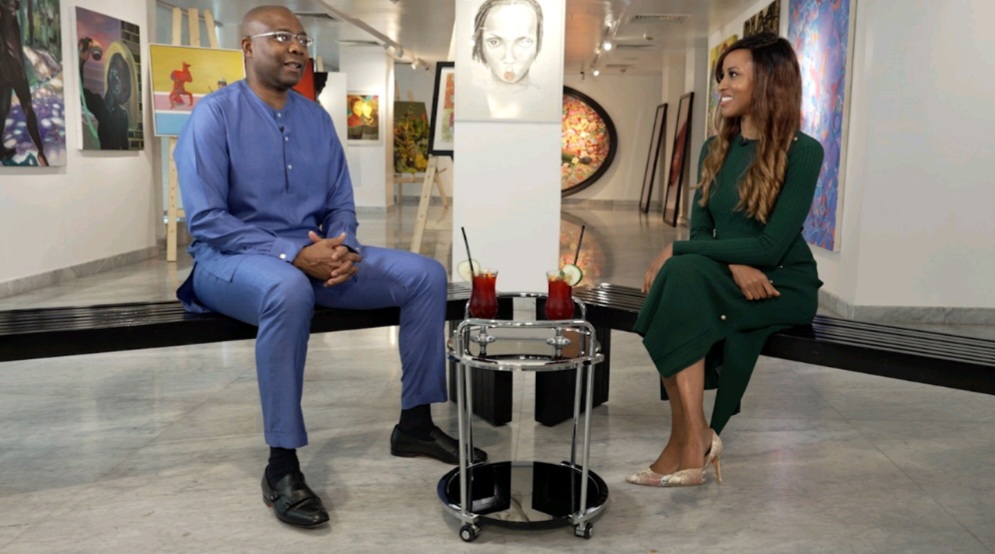
In new episode of CNN’s Marketplace Africa, Zain Asher heads to Lagos for an exclusive look at Aigboje Aig-Imoukhuede’s private art collection, some of which will be displayed at an upcoming exhibit at the Tate Modern in London. She sits down with the Chairman of Access Bank Holdings to talk about the importance of Nigeria’s creative capital and why he believes economic growth and international recognition goes hand in hand with championing art on the continent and abroad.
Aig-Imoukhuede begins the conversation by discussing the general underappreciation of African art, “You need infrastructure to support its promotion. Davido can’t play a concert to 50,000 Nigerians without an arena to do it. Artists cannot be bought unless you have museums and galleries that show them. Things are changing from the private sector standpoint, and things are changing even from a public sector standpoint, but not fast enough at all. The art you see around was very deliberately curated by me to show how much contemporary African artists are coming to the fore.”
The chairman furthers this point on the advancement of African artists by walking Asher through the strategy for ensuring Lagos can become an international art hub. He says, “The idea is that we will make Lagos an ecosystem where finance, technology, and culture merge. And of course, sports, entertainment and what have you, and be very intentional about creating an annual calendar of events for Lagos.”
Asher asks Aig-Imoukhuede what he thinks about the narrative around African art, to which he explains, “The world and the global citizen is denationalising, moving towards certain genres and certain things that make them comfortable, whether it’s colour, whether it’s material, whether it’s style, and so on. And we must be ready to live with that. So, I don’t know of any artists that I have seen become more or less Nigerian because of the market. But I have seen a lot of artists cater to what is happening and what is trending. If what is happening and what is trending is less African, then it means that we have to do more to make what is happening more African.”
With the Tate in London hosting a Nigerian modernism exhibition, Asher asks about the role Nigeria has played specifically, compared to other African countries, in terms of elevating African art. Aig-Imoukhuede says, “1 out of every 4 black Africans is Nigerian. So, the population reality is one that we cannot run from. Our population reality is such that there are so many of us that we have to show up because we do. And because we are so visible at every turn, I think we bear the burden for Africa to be a special kind of African.”
Asher and Aig-Imoukhuede end the interview by discussing the need for investment in art and what this looks like in Africa. He explains, “Art is strange in the sense that for many items, the weaker your currency is, the more exportable it becomes. Your value is assessed, not in local currency, but by a universal currency. And if therefore your art is described as a $10,000 piece, the problem is that if $10,000 in local currency means more, in other words, if currencies are devaluing, the artist wants to hold their global value. It means that art becomes more and more expensive. And I think that Africa has had over the last 10 years challenges with currencies. Many currencies are weakened, etc. and I think it’s affected the art world as a result.”
These interviews were featured on the latest episode of Marketplace Africa on CNN International.
https://edition.cnn.com/business/marketplace-africa
Marketplace Africa airs on CNN International at the following times:
For Advert, Event Coverage/Press Conference Invite, Story/Article Publication & Other Media Services
Contact Us On WhatsApp
Send Email To: citizennewsng@gmail.com
Visit Citizen NewsNG To Read More Latest And Interesting News Across Nigeria And The World