






Kolawole Olawuyi: The Voice That Entered The Belly Of Darkness | Citizen NewsNG
 Citizen NewsNG
3 min read
Citizen NewsNG
3 min read
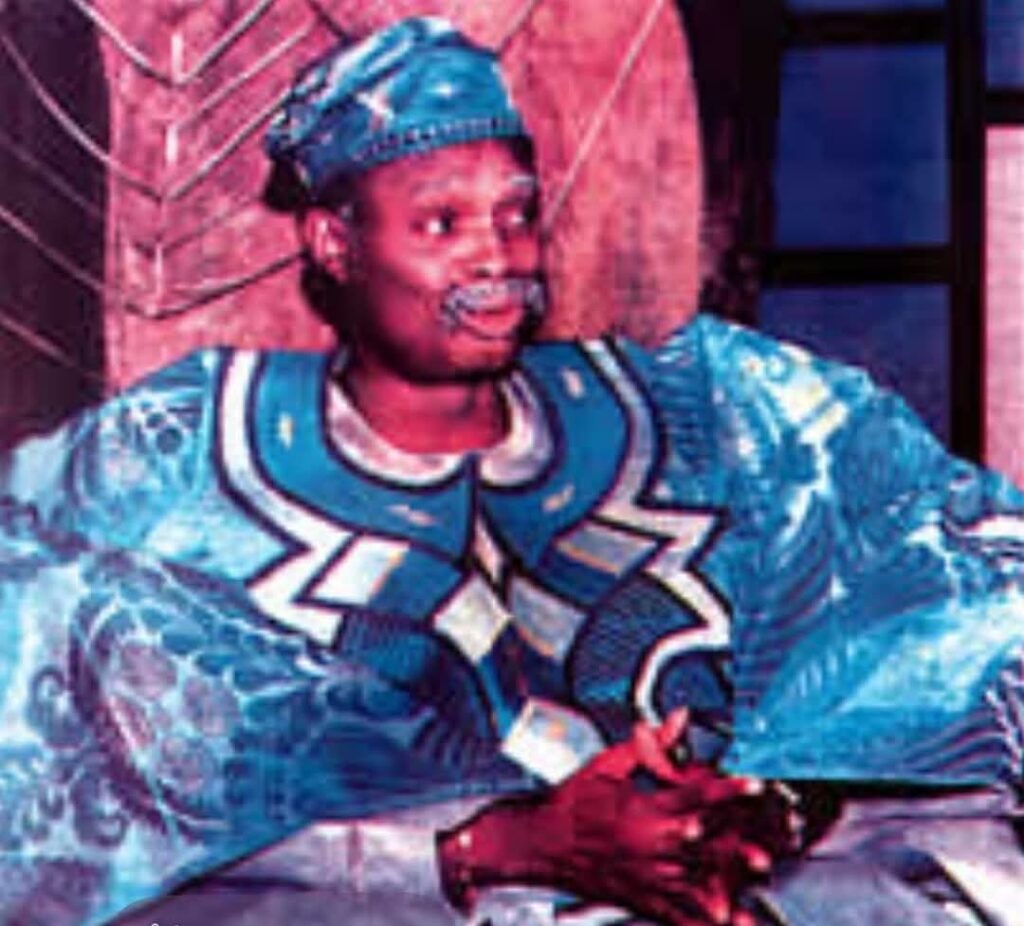
Kolawole Olawuyi remains one of Nigeria’s most enigmatic and influential investigative broadcasters, a master storyteller whose voice redefined radio journalism in the 1990s. Revered for his courage, narrative depth, and haunting delivery, Olawuyi pioneered a genre of broadcast storytelling that blended investigation, folklore, social commentary, and spirituality in a way Nigerian radio had never experienced before.
Early Life and Education
Kolawole Olawuyi was born in Ibadan, the capital of Oyo State, to a unique interfaith household—his father was a Christian pastor, while his mother was Muslim. This dual religious exposure would later shape his curiosity about belief systems, morality, spirituality, and the human condition.
He studied Mass Communication at The Polytechnic, Ibadan, and later gained admission to the University of Ibadan, where he was nearing completion of a Master’s degree in Communication Arts at the time of his death.
Broadcasting Career and the Birth of Ìrírí Ayé
Olawuyi began his professional career at the Federal Radio Corporation of Nigeria (FRCN). In 1992, he created what would become his most iconic contribution to Nigerian broadcasting: Ìrírí Ayé (“Experiences of Life”).
Aired as a 30-minute radio programme, Ìrírí Ayé broke every conventional rule of radio storytelling. Through calm but intense narration, Olawuyi explored deeply unsettling yet compelling human stories—tales of deception, religious extremism, fake prophets, cultism, moral collapse, and alleged supernatural practices. His storytelling style was immersive, suspense-driven, and philosophical, often leaving listeners disturbed, reflective, and emotionally invested.
Every Friday night, listeners across southwestern Nigeria reportedly gathered outdoors—spreading mats, lighting mosquito coils—just to listen to Olawuyi’s mystical voice unravel stories many were afraid to discuss openly.
Impact and Notable Stories
Two stories significantly elevated the programme’s popularity:
Okorocha, a fake prophet alleged to have used black eggs to stage miracles.
Malaika Agba, a woman who claimed to be “God”.
These episodes drew massive listenership but also attracted serious backlash. Olawuyi reportedly received threats and petitions from individuals and groups he described as “dark forces” and occult interests. Over time, Ìrírí Ayé became increasingly controversial and was eventually discontinued on FRCN.
Kolbim Communications and Nnkan Nbe
Undeterred, Olawuyi established Kolbim Communications, a freelance media outfit. Under this platform, he recreated his work as Nnkan Nbe (“Things Exist”), an audio-visual adaptation aired on Ogun State Broadcasting Corporation (OGBC), Abeokuta, and later Galaxy Television, Lagos.
The programme maintained the same chilling depth and narrative power, further cementing his reputation as Nigeria’s foremost investigative storyteller of the unseen and unexplained.
His trademark closing line:
“A o ma be òbe ní n’bẹ̀sù àtẹ́lẹ̀sẹ̀ àbẹ̀nà wò; ẹni ọ̀bànì amábò lààní dé bá…”
…became a haunting signature, always leaving audiences in suspense.
Mentorship and Legacy
Kolawole Olawuyi was also a mentor who helped train a generation of broadcasters and presenters. Among those who have acknowledged his influence is Yinka Ayefele, the popular radio personality and music producer.
Beyond journalism, Olawuyi was a committed Christian and a member of the Marvelous Tabernacle, Redeemed Christian Church of God (RCCG), LASU–Igando Road branch, Lagos.
Death and Controversy
Kolawole Olawuyi died on March 3, 2007, at the age of 44, under circumstances that remain controversial. Multiple narratives surrounded his death. Some sources claimed he fell ill shortly after cutting down an age-old tree in his compound—an act allegedly warned against by previous occupants. Others speculated that his death was linked to a sensitive investigation he was conducting at the time involving a religious figure.
No official conclusion has definitively resolved these claims.
Kolawole Olawuyi was more than a broadcaster—he was a chronicler of Nigeria’s hidden anxieties, a fearless investigator of moral contradictions, and a voice that dared to step into places others avoided. Long after his death, his programmes continue to be remembered as some of the most powerful and unsettling works in Nigerian broadcast history.
Source
FRCN Ibadan Archives
OGBC Abeokuta programme records
Galaxy Television archival interviews
Oral histories from Nigerian broadcast professionals
Contemporary media tributes and obituaries (2007)
Historical Nigeria
For Advert, Event Coverage/Press Conference Invite, Story/Article Publication & Other Media Services
Contact Us On WhatsApp
Send Email To: citizennewsng@gmail.com
Visit Citizen NewsNG To Read More Latest And Interesting News Across Nigeria And The World