





Lagos Mobilises Stakeholders To Foster Science-Driven Health Policies | Citizen NewsNG
 Citizen NewsNG
5 min read
Citizen NewsNG
5 min read
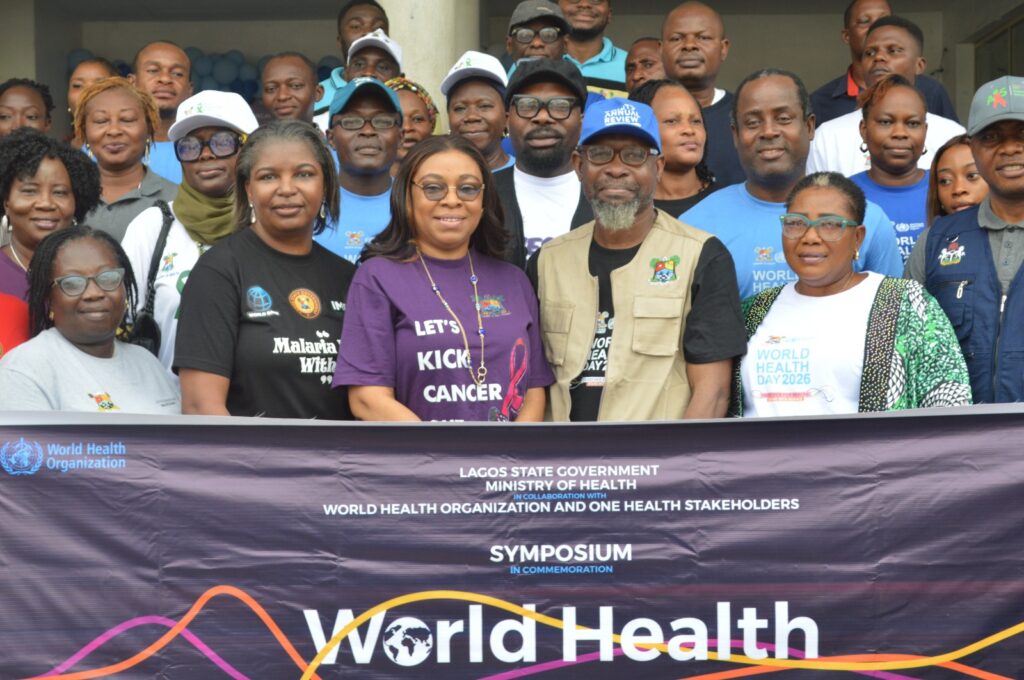
Lagos State on Tuesday took a bold step towards strengthening its health system as policymakers, development partners and experts converged at the Adeyemi Bero Auditorium, Alausa-Ikeja, to commemorate World Health Day 2026 with a high-level symposium focused on science-driven solutions.
The event, themed “Together for Health. Stand with Science: The Role of Scientific Collaboration in Protecting Human, Animal, Plant, and Planetary Health,” was preceded by an awareness walk within the Secretariat complex, signalling government’s commitment to preventive health and public engagement.
Delivering the keynote lecture, the Lagos State Commissioner for Health, Prof. Akin Abayomi, said the State is deepening reforms by deploying science, data, and innovation to strengthen health systems and improve outcomes.
Abayomi noted that Lagos is intentionally shifting towards evidence-driven governance, where policies are informed by research, surveillance, and real-time data. He emphasized that the goal is to build a system that is proactive, predictive, and resilient in the face of emerging health threats.
He highlighted how scientific approaches are already transforming healthcare delivery in the State, citing malaria control as a key example. According to him, the introduction of rapid diagnostic testing has reduced malaria positivity rates in public facilities from about 60 percent to five percent, revealing that “most fevers are not malaria” and enabling more accurate diagnosis and treatment.
The Commissioner further explained that Lagos is strengthening its capacity for research, innovation, and digital health systems, including the deployment of smart health information platforms to improve data management, patient care, and decision-making.
He added that ongoing investments in infrastructure; such as specialist hospitals, modern primary healthcare centres, and research institutions, are designed to support cutting-edge medical practice and scientific advancement within the State.
Abayomi stressed that these initiatives are positioning Lagos as a hub for medical innovation and a destination for quality healthcare, while reducing reliance on external systems and improving overall health security.
On reforms, the Commissioner said Lagos is expanding health insurance coverage, strengthening public-private partnerships and increasing health spending to nearly 15 percent of the State budget in line with the Abuja Declaration.
He added that the State is investing heavily in infrastructure, including the Massey Children’s Hospital, a new General Hospital in Ojo, and a 1,000-bed Mental Health Institute, while also upgrading primary healthcare centres with climate-smart designs.
Abayomi stressed that malaria positivity in public facilities has dropped from about 60 percent to five percent due to scientific diagnostic approaches, noting that “most fevers are not malaria,” a finding reshaping treatment protocols in the State.
Earlier in her opening remarks, the Special Adviser to the Governor on Health, Dr. (Mrs.) Kemi Ogunyemi, stressed the importance of collaboration in addressing Nigeria’s health challenges.
She said the theme underscores the urgency of collective action across sectors, noting that issues such as malaria, HIV and malnutrition require coordinated responses and stronger policy advocacy.
Ogunyemi highlighted key interventions by the State, including mandatory health insurance, improved emergency response systems and investments in digital health platforms, adding that these efforts are geared towards achieving universal health coverage.
In her welcome address, the Permanent Secretary, Dayo Lajide, said the symposium was designed to foster collaboration under the One Health approach.
Lajide noted that human, animal and environmental health are interconnected, stressing that “we have brought stakeholders together to strengthen our collective response to emerging health challenges.”
She added that the panel session provides a platform for cross-sectoral dialogue and shared learning to improve health outcomes in Lagos State.
Also speaking, Permanent Secretary, Ministry of Environment and Water Resources, Dr. Omobolaji Gaji, warned against working in silos, describing it as inefficient and unsustainable.
Gaji emphasized the need to prioritize preventive measures, noting that environmental issues such as pollution and poor waste management contribute significantly to disease burden.
In her goodwill message, the State Coordinator of the World Health Organization, Dr. Chinyere Okafor, highlighted the role of scientific breakthroughs in improving global health.
She called for increased domestic investment in research and innovation, while also urging stronger international collaboration to support African-led science.
Speaking for the Ministry of Agriculture and Food Systems, the Director Veterinary Services, Dr. Rasheed Macaulay, said the One Health approach is critical to food safety and disease prevention.
He cited the successful containment of an anthrax outbreak in Lagos through inter-ministerial collaboration as evidence of the effectiveness of science-driven action.
Permanent Secretary, Lagos Health District VI, Dr. Olufemi Omololu, stressed that healthcare now extends beyond hospitals to environmental and social determinants.
Omololu said data and surveillance must guide preventive strategies, adding that collaboration across sectors is essential to addressing emerging health threats.
President of the Healthcare Federation of Nigeria, Njide Ndili, called for stronger integration of private sector data into national health systems.
She noted that a large volume of valuable data remains underutilized, warning that without proper integration, One Health would remain theoretical.
Director of Epidemiology, Biosecurity and Global Health at the Lagos State Ministry of Health, Dr. Ismail Abdus-Salam, said Lagos has strengthened its surveillance systems through digital platforms such as SORMAS.
He added that climate-resilient health infrastructure and research are central to the State’s preparedness for future health emergencies.
Moderator of the panel session, Prof. Ololade Wright, described the theme as timely, noting that it reflects the intersection of multiple sectors critical to public health.
She said the recognition of research and evidence in policymaking marks a significant step towards transforming health outcomes.
Goodwill messages were also delivered by partners including Head of Lagos Office, United Population Fund (UNFPA), Abigail Msemburi, who reaffirmed commitment to improving reproductive health and supporting vulnerable populations.
Similarly, Country Director, The Challenge Initiative, Dr. Taiwo Johnson emphasized the importance of translating scientific evidence into action through partnerships, while the Program Manager and State Lead at Clinton Access Initiative (CHAI) Aisha Ejigbo stressed that data-driven interventions remain key to improving health outcomes.
Participants at the symposium unanimously agreed that strengthening collaboration, investing in science, and combating misinformation are critical to building a resilient health system.
The event concluded with a renewed commitment by stakeholders to advance the One Health approach and ensure that science remains at the centre of policy and practice in Lagos State.
For Advert, Event Coverage/Press Conference Invite, Story/Article Publication & Other Media Services
Contact Us On WhatsApp
Send Email To: citizennewsng@gmail.com
Visit Citizen NewsNG To Read More Latest And Interesting News Across Nigeria And The World