





Universal Basic Education Commission Restates Commitment To Education Of Girl-Child, Vulnerable Children | Citizen NewsNG
 Citizen NewsNG
2 min read
Citizen NewsNG
2 min read
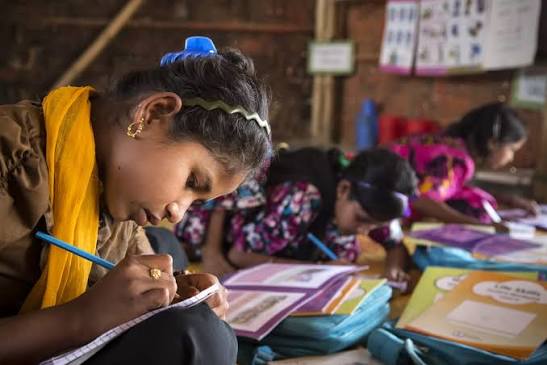
The Universal Basic Education Commission (UBEC) has reaffirmed its commitment to ensuring inclusive, equitable, and quality basic education for Nigerian children, especially girls, children with special needs, and other vulnerable groups, through the newly launched HOPE for Quality Basic Education (HOPE-EDU) programme.
UBEC Executive Secretary, Dr Aisha Garba, made this known at a three-day sensitisation workshop held in Lagos for Commissioners of Education, Chairmen of State Universal Basic Education Boards (SUBEBs), and heads of key implementing departments from across the South-South and South-East regions.
The workshop focused on preparing state-level stakeholders for the rollout of the HOPE-EDU and HOPE-Governance (HOPE-GOV) programmes, ambitious initiatives supported by a $552.18 million investment from the World Bank and the Global Partnership for Education (GPE).
According to a report, for Nigeria to curtail the increasing number of out-of-school children in the country, an additional 20,000 schools and 907,769 classrooms must be provided.
The out-of-school children population in Nigeria is estimated to be more than 17 million at both the primary and secondary school levels.
Dr Garba described the HOPE programmes as a “turning point” for Nigeria’s basic education system.
She said the initiatives are strategically aligned with President Bola Ahmed Tinubu’s Renewed Hope Agenda and the Nigeria Education Sector Renewal Initiative.
According to her, the programme aimed to improve learning outcomes for over 29 million children, empower 500,000 teachers, construct 13,000 classrooms, and bring millions of out-of-school children back into the school system nationwide.
“These are not abstract goals; they are actionable interventions. The success of this programme lies in transparency, accountability, and collaboration across all levels of government,” she said.
While UBEC and the Federal Ministry of Education will provide funding and technical guidance, Dr Garba emphasised that state-level actors will drive the implementation.
“You will lead needs assessments, community mobilisation, engagement and sensitisation, and the on-the-ground execution,” she told the participants.
She urged commissioners and SUBEB chairmen to build strong partnerships with local governments, civil society groups, parents and the private sector, stressing that multi-stakeholder collaboration is essential.
A major priority of the HOPE-EDU initiative is closing gaps in access to education, particularly for groups historically left behind.
“Above all, let us work with all children and especially the most marginalised, the special-needs child, the girl child, the vulnerable, and children in conflict zones. Their education is not charity; it is the cornerstone of our democracy and economy,” Dr Garba emphasised.
Dr Garba announced that UBEC will deploy digital dashboards that enable real-time tracking of spending, activities, and progress, ensuring that every naira is accounted for.
The HOPE-GOV component is structured to promote measurable, transparent, and results-based reforms, reinforcing accountability within state education systems.
Garba charged participants to identify implementation challenges and co-create practical solutions to strengthen basic education delivery.
By Clement Idoko
For Advert, Event Coverage/Press Conference Invite, Story/Article Publication & Other Media Services
Contact Us On WhatsApp
Send Email To: citizennewsng@gmail.com
Visit Citizen NewsNG To Read More Latest And Interesting News Across Nigeria And The World