





 Citizen NewsNG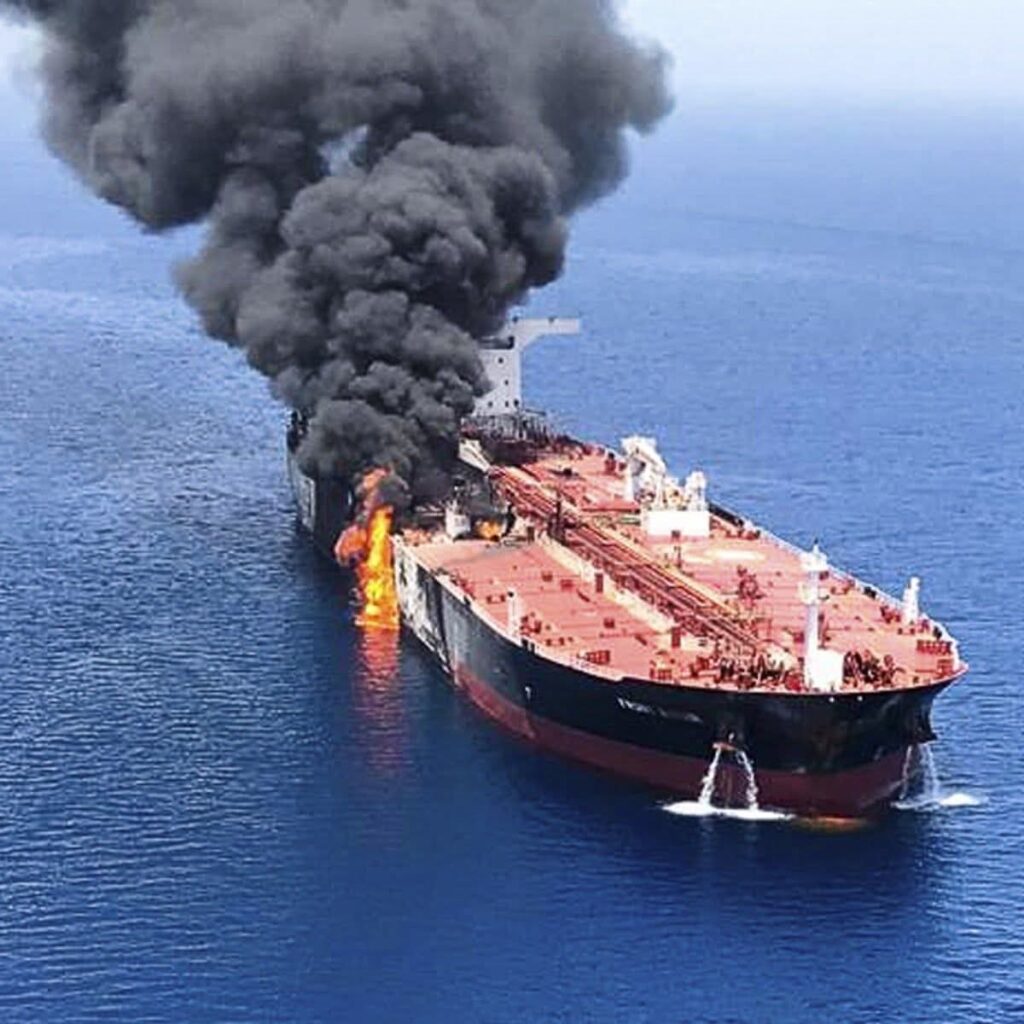
Iran’s Islamic Revolutionary Guard Corps, IRGC, has reportedly struck a United States-linked oil tanker in the Persian Gulf, in what analysts describe as a major escalation in the ongoing military confrontation involving Iran, the United States and its regional allies
Iranian state media said the tanker was targeted early Thursday in the northern part of the Gulf by missiles fired by IRGC naval forces, adding that the vessel caught fire following the attack.
According to the IRGC, the strike was carried out as part of measures to enforce Iran’s control over maritime movement in the strategic Strait of Hormuz during wartime. The force warned that vessels belonging to the United States, Israel, European countries and their allies could be targeted if they attempt to pass through the area.
Rising tensions in the Gulf
The reported attack comes amid a rapid escalation of hostilities between Iran and a US-Israel alliance following recent military strikes on Iranian targets. The conflict has triggered a series of retaliatory attacks across the Middle East, including missile and drone strikes on US-linked facilities and vessels in the region.
Security agencies monitoring maritime traffic in the Gulf said an explosion occurred near a commercial vessel, with early indications of damage and a possible oil leak after the blast. The incident reportedly occurred about 30 nautical miles off the Kuwaiti coast.
The Strait of Hormuz, which connects the Persian Gulf to the Indian Ocean, is considered one of the world’s most important oil transit routes, handling about one-fifth of global petroleum supplies.
The growing instability in the Gulf has already begun to impact global energy markets. Oil prices climbed sharply after reports of attacks on tankers and other energy infrastructure in the region.
Shipping through the Strait of Hormuz has also slowed significantly, with hundreds of vessels reportedly stranded or avoiding the route because of the security risk.
Analysts warn that continued attacks on oil infrastructure and shipping lanes could trigger a major disruption in global energy supply chains and push crude prices higher in the coming days.
Diplomatic uncertainty
The latest development has further deepened concerns among international observers that the conflict could spiral into a broader regional war.
Diplomatic efforts to de-escalate tensions have so far produced little progress, while both sides continue to exchange military strikes and warnings.
If confirmed, the attack on the tanker would mark one of the most direct strikes on energy shipping in the Gulf since the current round of hostilities began.
For Advert, Event Coverage/Press Conference Invite, Story/Article Publication & Other Media Services
Contact Us On WhatsApp
Send Email To: citizennewsng@gmail.com
Visit Citizen NewsNG To Read More Latest And Interesting News Across Nigeria And The World