







 Citizen NewsNG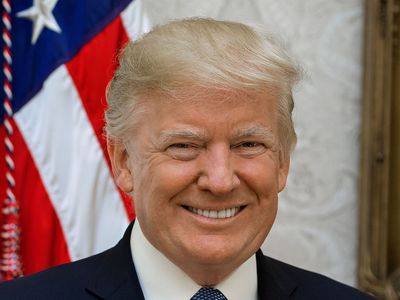
The United States has slashed its imports of Nigerian goods by more than 40 per cent within a month, raising fresh concerns about the fragility of Nigeria’s trade ties with one of its most critical partners.
Data from the US Census Bureau and Bureau of Economic Analysis show that imports from Nigeria fell from $639m in June 2025 to $379m in July a 41 per cent drop.
At the same time, US exports to Nigeria also declined, sliding from $919m in June to $584m in July.
Despite this dip, Washington still recorded a trade surplus of $206m in July, compared with $280m the previous month.
From January to July 2025, the US exported $3.92bn worth of goods to Nigeria while importing $3.14bn, leaving a year-to-date surplus of $781m.
July’s sharp decline in Nigerian exports, however, underscores the erosion of Nigeria’s traditional surplus and its weakening foothold in the American market.
Regionally, Africa’s overall trade with the US tells a mixed story.
Imports from Africa climbed to $4.47bn in July, up from $3.67bn in June, while exports to the continent slipped slightly from $3.37bn to $3.30bn.
This shift left Washington with a $1.17bn deficit in July, compared to $302m in June.
Between January and July 2025, the US exported $22.98bn to Africa and imported $27.84bn, creating a deficit of $4.86bn.
Country-level data show varied results. The US maintained a surplus with Egypt, exporting $847m in July while importing $290m, for a balance of $557m.
With South Africa, however, America’s deficit deepened, as imports hit $1.99bn against exports of just $565m producing a $1.42bn shortfall for July and a cumulative deficit of $7.74bn so far this year.
Algeria and several smaller African economies also contributed to America’s widening deficit.
Nigeria’s decline coincides with new trade measures under US President Donald Trump.
In late July, Trump signed an executive order increasing tariffs on Nigerian exports from 14 per cent in April to 15 per cent under his “reciprocal” tariff policy aimed at surplus countries.
Although crude oil the backbone of Nigerian exports has been partly exempt, uncertainty around tariff enforcement has dampened demand, especially for non-oil goods now subject to higher duties.
For Washington, the move is part of a broader effort to protect domestic industries and reduce trade imbalances.
For Nigeria, the immediate effect is reduced access to the US market and erosion of its surplus position.
Nigeria’s Minister of Industry, Trade and Investment, Jumoke Oduwole, said the country would not be pressured into retaliation.
“Nigeria remains responsive; we’re not reacting. We’re focused on the eight-point agenda of President Bola Tinubu. We will continue to support domestic investors and expand market access for Nigerian businesses,” she said.
She added, “It’s mostly an energy trading relationship, but we are waiting to see what happens with AGOA (African Growth and Opportunity Act) in September. We are also growing exports to other African countries and expanding partnerships with Brazil, China, Japan, and the UAE.”
Oduwole emphasised that Nigeria would pursue South–South cooperation, diversify exports, and reduce reliance on the US.
Development economist and CSA Advisory CEO, Dr Aliyu Ilias, urged Nigeria to view the situation as an opportunity.
“I think it’s a good time that this is happening to Nigeria. Trump’s tariff is not only for Nigeria. The advantage is that we are now exporting more overall, which is positive for us,” he said.
He argued that Nigeria could leverage BRICS and other alliances to reduce vulnerability. “We also have to start being on our own. We can trade with other partners and see, because other partners are also looking for partners. The tariff that is affecting us is also affecting others, so it may be a good opportunity,” he added.
Similarly, economist and CEO of the Centre for the Promotion of Private Enterprise, Dr Muda Yusuf, played down the impact.
“Our trade with the US is not that strategic. When anything goes wrong, it is not as if it can have any fundamental effect on our economy. Our trade exposure to them is very limited,” he said.
Yusuf pointed out that Nigerian exports to the US are mostly crude oil and a few commodities like fertilisers, making the trade profile narrow.
He added that while tariffs pose some risk, US visa restrictions are a bigger obstacle. “The bigger challenge for Nigeria’s trade relationship with the U.S. is Washington’s visa policy.
Barriers to travel limit business interactions and investment inflows. That is more critical than tariffs in the long run,” he said.
Although Nigeria’s exports to the US have fallen sharply, experts and officials argue that the setback could speed up much-needed diversification.
With AfCFTA integration, rising non-oil exports, and growing partnerships with Asia, the Middle East, and Latin America, Nigeria is working to cushion the impact of US trade realignments.
Still, July’s trade data highlight Nigeria’s vulnerability to external shocks and its dependence on energy exports.
For now, the slump in US imports is both a warning sign and an opportunity a chance to rethink and rebuild Nigeria’s trade relationships for long-term resilience.
For Advert, Event Coverage/Press Conference Invite, Story/Article Publication & Other Media Services
Contact Us On WhatsApp
Send Email To: citizennewsng@gmail.com
Visit Citizen NewsNG To Read More Latest and Interesting News Across Nigeria and the World