







Lagos Upscales Disease Surveillance Mechanism, Trains DSNOs | Citizen NewsNG
 Citizen NewsNG
4 min read
Citizen NewsNG
4 min read
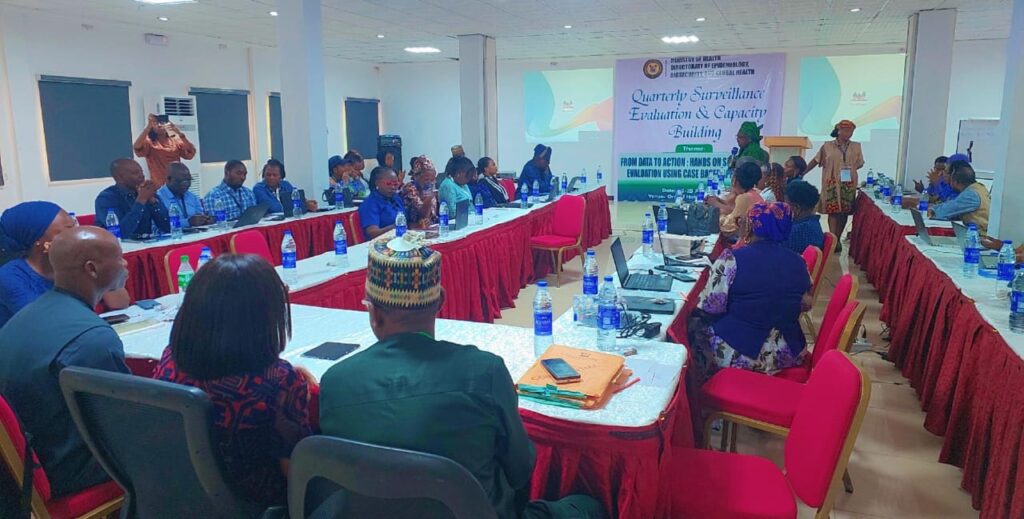
Lagos State Ministry of Health has intensified efforts to strengthen disease surveillance and outbreak response with a four-day Quarterly Surveillance Evaluation and Capacity Building programme for Disease Surveillance and Notification Officers (DSNOs), holding at Orchid Hotel, Lekki.
The training, themed “From Data to Action: Hands-on Surveillance Evaluation Using Case-Based Approaches,” brought together frontline surveillance officers, public health experts, laboratory scientists, and development partners to sharpen skills in real-time data use and coordinated response.
Speaking during a visit on Thursday, Permanent Secretary, Lagos State Ministry of Health, Dr. Dayo Lajide, underscored the importance of maximizing in-person training opportunities despite funding and logistical constraints.
“I want to specially acknowledge and appreciate the Governor of Lagos State, Mr. Babajide Olusola Sanwo-Olu, for his continued support in making programmes like this possible. This is an opportunity aimed at capacity building that ultimately results in good health outcomes for residents and we must make the best use of it,” she said.
Lajide described the theme as apt, noting that the transition from data collection to actionable intelligence remains central to effective public health interventions in an increasingly complex global health environment.
She conveyed greetings from the State Commissioner for Health, Prof. Akin Abayomi, and the Special Adviser to the Governor on Health, Dr. (Mrs.) Kemi Ogunyemi, commending participants for their commitment to strengthening the state’s surveillance architecture.
Highlighting the pivotal role of DSNOs, the Permanent Secretary said, “You are truly the first point of alert in our system,” while stressing the need for adherence to proper reporting channels to ensure timely interventions at both district and state levels.
She further emphasized the importance of communication, noting that inaccurate or poorly managed information dissemination could trigger unnecessary public anxiety, especially in cases involving infectious diseases such as COVID-19.
“We may be doing a lot of work, but without proper dissemination of information, the public remains uninformed,” she said, adding that trained public affairs officers are critical in managing risk communication effectively.
Lajide also acknowledged the contributions of stakeholders across the surveillance ecosystem, including laboratory teams, emergency operations personnel, academic institutions, and donor partners, describing their collaboration as essential to building a resilient health system.
Earlier in his welcome address, Director of Epidemiology, Biosecurity and Global Health, Dr. Ismail Abdus-Salam, described the programme as a flagship initiative unique to Lagos State.
“As we have always said here in Lagos, we strive to be the first, and we are proud to be the only state organizing this kind of programme,” he stated.
He noted that the training was designed to reinforce learning through repetition while introducing new innovations in surveillance practice, including the transition from paper-based to electronic systems and improved data communication to policymakers.
“The essence of this programme is capacity building and ensuring that we translate data into action,” Abdus-Salam said, adding that the interactive format allows DSNOs to both teach and learn from one another.
Also speaking, the State Disease Surveillance and Notification Officer, Mr. Lakunle Openiyi, said the training focused on equipping participants with practical skills using real-time case scenarios.
“The goal is to ensure that surveillance data is effectively utilized to guide timely and evidence-based public health decisions at both community and state levels,” he said.
Participants at the training shared positive feedback, describing the sessions as practical and impactful. The Ibeju-Lekki DSNO, Mr. Samson Omotesho noted that the case-based approach provided clearer insight into outbreak detection and response, while the Somolu DSNO, Mrs. Adebukola Adeniji highlighted improved understanding of data analysis and reporting accuracy.
They both called for sustained capacity-building initiatives and replication of similar trainings at local government and facility levels to strengthen grassroots surveillance.
In her closing remarks, Surveillance and Disease Control Programme Officer at the Lagos State Primary Health Care Board, Dr. Modinat Akiolu, described surveillance as the “eyes and hands of the health system.”
“Imagine missing the detection of an outbreak in your community and the number of lives that could be affected. This highlights the importance of your role,” she said.
Akiolu commended the consistency of the programme and the support of the Ministry’s leadership, urging participants to apply the knowledge gained to improve outbreak detection and response.
She added that surveillance goes beyond data collection to include leadership, problem-solving, and service delivery, all geared toward protecting public health.
The four-day programme, which runs from April 22 to 25, 2026, is expected to strengthen Lagos State’s capacity for early detection, reporting, and response to public health threats, reinforcing its position as a leader in disease surveillance in Nigeria.
For Advert, Event Coverage/Press Conference Invite, Story/Article Publication & Other Media Services
Contact Us On WhatsApp
Send Email To: citizennewsng@gmail.com
Visit Citizen NewsNG To Read More Latest And Interesting News Across Nigeria And The World