






 Citizen NewsNG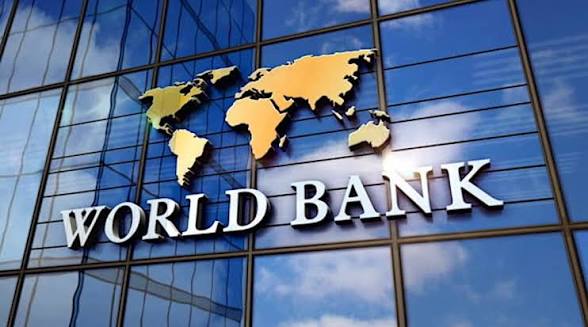
The World Bank has approved a new $1.25 billion financing package for Nigeria under its Nigeria Actions for Investment and Jobs Acceleration (NAIJA) programme, as part of a broader strategy aimed at stimulating economic growth, attracting private investment, and creating millions of jobs.
The approval was announced on Wednesday alongside the unveiling of the bank’s new Country Partnership Framework (CPF) for Nigeria, which will guide its development support to Africa’s largest economy from 2026 to 2032.
According to the World Bank, the six-year framework is designed to support Nigeria’s transition toward a more inclusive and resilient economy by promoting private sector-led growth, improving infrastructure, and expanding access to essential services.
Loan Sparks Debate Over Nigeria’s Rising Debt
The latest facility comes at a time when the Federal Government is facing mounting criticism over its growing reliance on external borrowing.
Many Nigerians have questioned the need for additional loans, arguing that previous borrowings have yet to produce noticeable improvements in living conditions, despite repeated assurances that the funds would be used to stimulate economic growth and improve infrastructure.
Critics have also expressed concerns about the country’s rising debt profile and the long-term implications of continued borrowing on future generations.
Focus on Jobs, Electricity, Broadband and Agriculture
Explaining the objectives of the new partnership, the World Bank said the programme builds on recent macroeconomic reforms implemented by the Nigerian government, which it believes have strengthened economic stability, increased foreign reserves, and improved investor confidence.
Through the new framework, the bank plans to help expand electricity access to 32 million Nigerians, provide broadband connectivity for 58 million people, improve healthcare services for approximately 40 million citizens, and support about 9.5 million farmers to boost agricultural productivity and food security.
The newly approved $1.25 billion financing will also support reforms aimed at modernising Nigeria’s digital economy, improving electricity sector governance, reducing trade barriers in line with regional agreements, and strengthening the country’s domestic capital markets.
World Bank Now Nigeria’s Largest External Creditor
Figures released by Nigeria’s Debt Management Office (DMO) show that the country’s debt to the World Bank increased from $17.81 billion at the end of 2024 to $19.89 billion as of December 31, 2025.
This means the Washington-based institution now accounts for more than 38 percent of Nigeria’s total external debt stock, which stood at $51.86 billion during the same period.
The figures underscore the World Bank’s position as Nigeria’s largest multilateral lender, reflecting the country’s continued dependence on concessional financing to support economic reforms and development projects.
World Bank Expresses Confidence in Nigeria’s
In a statement announcing the approval, the World Bank said its new Country Partnership Framework is intended to help Nigeria generate sustainable economic growth by encouraging private investment and expanding employment opportunities.
“The World Bank Group has endorsed a new Country Partnership Framework for Nigeria spanning 2026–2032, setting out a strategy to create more and better jobs at scale by unlocking private sector-led growth,” the institution stated.
It added that the framework would support Nigeria’s transition toward a more inclusive growth model capable of creating jobs while improving economic opportunities for millions of citizens.
The World Bank’s Country Director for Nigeria, Mathew Verghis, said recent economic reforms have helped stabilise the country’s macroeconomic environment but stressed that greater efforts are needed to ensure ordinary Nigerians benefit from those gains.
“Our new Country Partnership Framework provides the strategy for how the World Bank Group will support Nigeria over the coming years, with a strong focus on helping to create more and better jobs, particularly by enabling private sector-led growth,” Verghis said.
“The recent macroeconomic gains have been critical to help stabilise the economy. Translating improved macroeconomic conditions into better living standards will require addressing the structural constraints to spur private sector investment and job creation.”
Private Investment Key to Long-Term Growth
Also commenting on the initiative, Dahlia Khalifa, Divisional Director for Nigeria at the International Finance Corporation (IFC), said the country’s ongoing economic reforms have created fresh opportunities to attract domestic and foreign investment.
According to her, Nigeria’s long-term economic success will largely depend on its ability to improve productivity, encourage private enterprise, and create employment opportunities for its rapidly growing population.
Meanwhile, Ed Mountfield, Vice-President and Chief Financial Officer of the Multilateral Investment Guarantee Agency (MIGA), noted that although Nigeria’s reform agenda is opening new investment opportunities, concerns over investment risks remain.
He explained that MIGA would continue providing guarantees and political risk insurance to help reduce investor uncertainty and encourage greater capital inflows into the country.
The latest financing package forms part of the World Bank Group’s broader strategy to support Nigeria’s economic recovery, strengthen critical sectors, and accelerate sustainable development through private sector participation.
For Advert, Event Coverage/Press Conference Invite, Story/Article Publication & Other Media Services
Contact Us On WhatsApp
Send Email To: citizennewsng@gmail.com
Visit Citizen NewsNG To Read More Latest And Interesting News Across Nigeria And The World