







3.4 Billion People Face Housing Problem Across The World — Report | Citizen NewsNG
 Citizen NewsNG
3 min read
Citizen NewsNG
3 min read
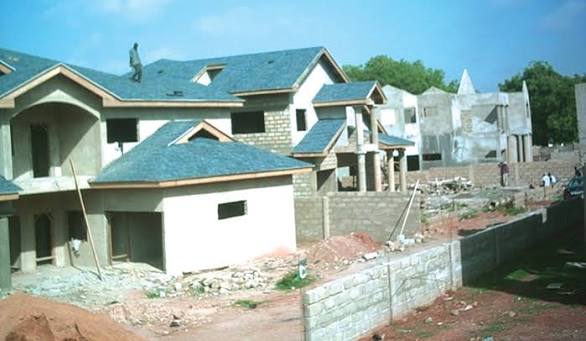
No fewer than estimated 3.4 billion people are affected by inadequate housing globally, the report of the 13th World Urban Forum, has said.
According to the report, global housing crisis is reaching its tipping point, noting that the crisis is not accidental but the result of deep structural, systemic, and governance failures.
The crisis, the report said was driven by complex and interconnected factors, related to dispossession, colonization, racism, inequality and other historical and current contexts.
Despite global and national commitments, it pointed out that public funding for housing has been shrinking and conventional finance has remained fragmented, short-term and poorly connected to the territories where housing is planned, serviced, upgraded, built and managed.
“Local and regional governments are at the Frontline of urban transformation and delivery but often do not have the mandate, capacity or resources to address the global housing crisis;
“Conflict, war and urbicide are directly impacting civilian infrastructure such as schools, hospitals, public amenities and homes as well as ecology and biodiversity rendering people homeless and often forcing them to become refugees or Internally
Displaced Persons (IDPs); while urban centres, megacities and secondary cities are rapidly changing in demography,” the report read.
Besides, it noted that repeated floods, droughts, biodiversity loss, pollution, extreme heat, and worsening air quality are having devastating impacts on public health, ecosystems, livelihoods, livability, and overall quality of life.
Worried by the scale of the global housing challenge, stakeholders at the 13th World Urban Forum of the UN- Habitat in Baku, Azerbaijan, called for an assertive, concerted, and urgent response.
In the Baku Call to Action report, stakeholders urged the need for housing to be reprioritised, guided by the stewardship of integrated housing policies, supported by organised multi-stakeholder action, longterm context specific financing, improved implementation capacity, multilevel governance, sustained public investment, and measurable accountability mechanisms.
The report noted that housing finance systems remained fragmented, uncoordinated and inaccessible, with limited public investment, unequal access to credit and mechanisms that fail to reach low income households and communities.
The stakeholders called for the reimagining of housing finance value chain to prioritize inclusion and scale by strengthening municipal finance with a focus on fiscal autonomy and revenue generation strategies.
They also called on development banks and the private sector to prioritise access to credit and establish predictable, long-term financing frameworks that are territorially grounded and accessible to those most in need.
“We encourage the private sector to partner with national and local governments, central banks, financial institutions and organised community savings to pioneer new ways to calculate and manage risk, target subsidies, expand access to credit and blend finance.
“We encourage parliamentarians and national treasury to diversify government subsidies to cater to diversity of housing approaches, drawing in private and community-led savings,” the report read.
The forum called for housing systems that strengthen climate resilience, preserve biodiversity and mitigate harmful impacts through nature-based, community-led and locally grounded solutions, committed to climate justice and supported by environmentally conscious urbanisation and planning.
“We call for strengthening people-led localized, indigenous and traditional practices along with national and local government interventions towards resilient infrastructure, renewable energy, basic services, disaster preparedness and prevention, livelihoods and social networks, “ it read.
To see home as the catalyst for integration, the forum called on professionals, academia and research institutions to develop a shared vision with government and civil society calling for integrated urban planning and targeted subsidies that include housing, economic opportunities and transport.
To ensure homes are affordable for all, the forum called for sustained measures to improve affordability, including expanding access to rental and social housing, advancing inclusionary zoning, strengthening subsidies and cost-reduction strategies, regulating speculative practices, improving property taxation systems and access to finance across income groups.
“We encourage parliamentarians and national governments to introduce legislative measures that protect affordability, while encouraging increased delivery through public housing programmes, Development Finance Institutions (DFI’s), private sector and self-built housing initiatives,” the report read.
By Dayo Ayeyemi
For Advert, Event Coverage/Press Conference Invite, Story/Article Publication & Other Media Services
Contact Us On WhatsApp
Send Email To: citizennewsng@gma Across Nigeria And The World