







Oil Prices Increase Amid US-Iran Bombing In Strait Of Hormuz | Citizen NewsNG
 Citizen NewsNG
3 min read
Citizen NewsNG
3 min read
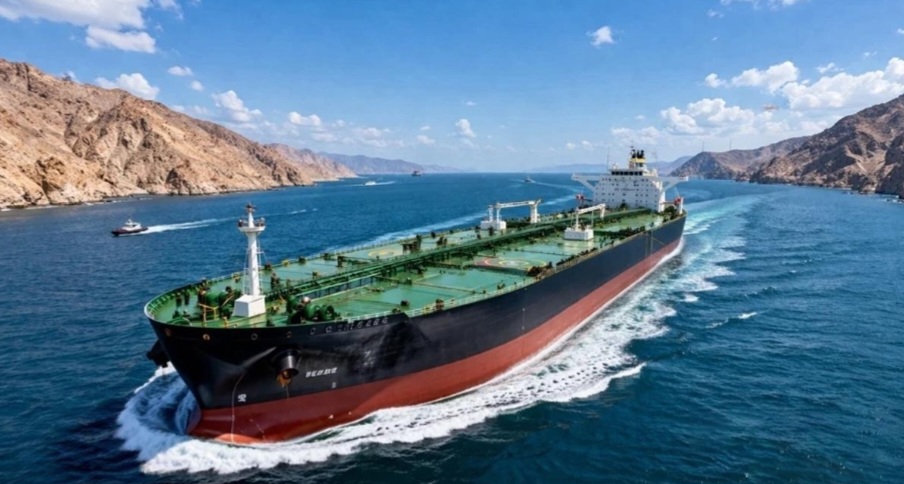
Oil prices climbed to a nearly six-week high, on Monday, as escalating US-Iran strikes in and around the Strait of Hormuz raised fears of prolonged disruption to global energy supplies.
Brent crude, the global benchmark, hovered around $97 a barrel, up nine percent over the past five days and 19 percent in the past month.
US West Texas Intermediate crude rose 79 cents to $92.27 a barrel.
The Strait of Hormuz, a vital oil-shipping route, normally carries about one-fifth of the world’s oil supply.
Tensions escalated over the weekend after the United States struck three Iranian oil tankers on Saturday. Iran’s Islamic Revolutionary Guard Corps said it had also attacked three tankers and three US-linked vessels elsewhere.
“This is a reflection of continued conflict and exchange of fire,” Rachel Ziemba, an adjunct senior fellow at the Center for a New American Security, told Al Jazeera. “The supply deficits globally are persisting, and there is little end to these shortages.”
Concerns deepened after Saudi Aramco’s Jizan facilities were reportedly struck on Monday, for the second time in a month, potentially delaying a return to production.
Shipping through the Strait has also fallen sharply. Data firm Kpler said an average of 10 commodity ships crossed the chokepoint each day over the past 10 days.
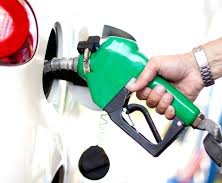
Higher crude prices are already pushing up fuel costs in the United States.
Reports show that the national average petrol price rose seven cents in a week to $4.15 a gallon, on Monday, according to the American Automobile Association. That compares with $4.04 a month ago and $2.98 on February 28, when the US and Israel first struck Iran.
Diesel prices have also hit record levels, rising above $5.90 a gallon on Monday, after reaching $5.85 last week.
Patrick De Haan, head of petroleum analysis at GasBuddy, was quoted by Aljaseera as having warned that record diesel prices would eventually feed into the wider economy through higher transport and production costs.
US households have spent an average of $764.59 on fuel since the war began, about $418.82 more than usual, according to Brown University’s Watson School of International and Public Affairs.
Asian economies are particularly exposed to disruptions because they rely heavily on oil shipments through the Strait of Hormuz.
China has sought to limit the impact by drawing on its strategic petroleum reserves and reducing its reliance on imports.
John Gong, an economics professor at the University of International Business and Economics, said China had been preparing for supply disruptions by conserving oil and gas and securing alternative sources, including supplies from Russia.
Beijing is also accelerating its shift towards alternative energy. More than half of cars sold in China are now electric, Gong said.
Analysts warn that if disruption in the Strait persists, higher oil and fuel prices could intensify inflationary pressures and raise transportation and production costs worldwide.
This version is more suitable for a print or online newspaper: the lead gets to the main development immediately, background is compressed, and the strongest figures and quotes are retained.
For Advert, Event Coverage/Press Conference Invite, Story/Article Publication & Other Media Services
Contact Us On WhatsApp
Send Email To: citizennewsng@gmail.com
Visit Citizen NewsNG To Read More Latest And Interesting News Across Nigeria And The World