







Lagos, Federal Govt. Join Forces To Curb Maternal, Newborn Deaths | Citizen NewsNG
 Citizen NewsNG
5 min read
Citizen NewsNG
5 min read
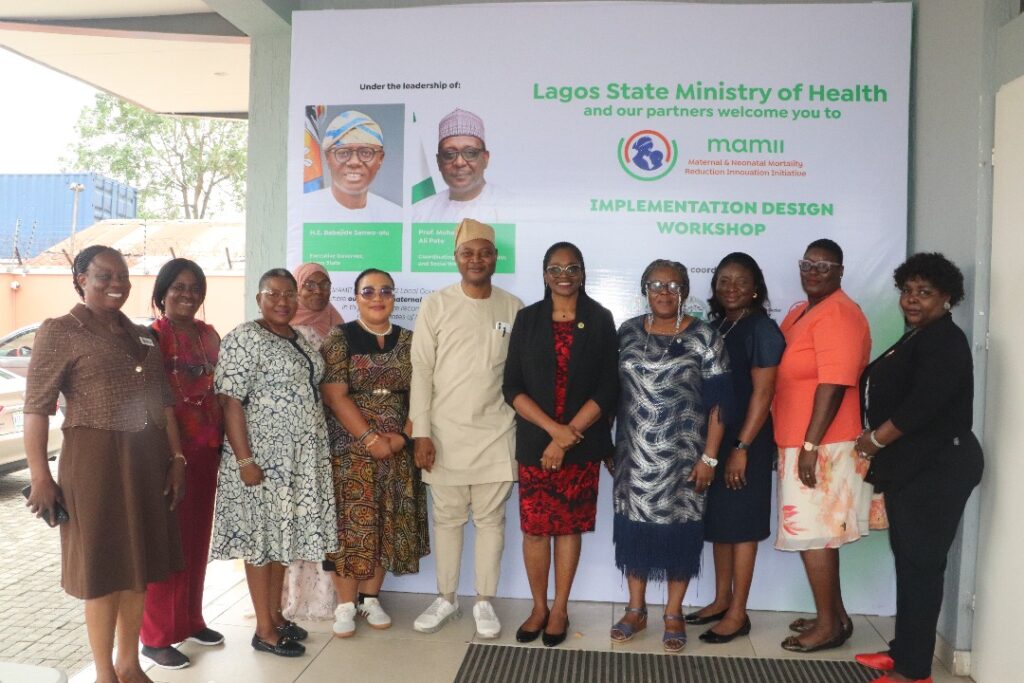
The Lagos State Government, in partnership with the Federal Ministry of Health and development partners, on Monday, commenced a five-day Maternal and Neonatal Mortality Reduction Innovation Initiative (MAMII) Activation Workshop aimed at developing a coordinated plan to tackle preventable maternal and infant deaths in the state.
Declaring the workshop open at Protea Hotel, Alausa, the Lagos State Commissioner for Health, Prof. Akin Abayomi, said the State Government was deeply concerned about the persistent burden of maternal and infant mortality and is determined to understand and address the peculiar factors contributing to the problem within the state.
Abayomi explained that Lagos, despite being perceived as a well-resourced state, still faces unique challenges due to its dense population and rapid migration. “The moment you cross into Lagos, you become the responsibility of the government—and if you have a health issue, you become my responsibility,” he noted.
He said the government was interrogating its health data to determine the true magnitude of the problem, acknowledging that even with better infrastructure and human resources than other states, Lagos must do more to ensure equitable access to quality healthcare. “We are working to ensure Lagos becomes a state with both eyes open, not a one-eyed giant among the blind,” he added.
The Commissioner highlighted that one of Lagos State’s major focus areas is health financing, emphasizing the importance of health insurance to prevent catastrophic health expenditures. He said the state has domesticated the National Health Insurance Authority Act through an executive order by Governor Babajide Sanwo-Olu to make health insurance mandatory for all residents.
Abayomi further disclosed that the government was upgrading 47 of the state’s 327 Primary Healthcare Centres (PHCs) this year and addressing ward-level inequalities in PHC distribution to improve accessibility. He added that Lagos was also tackling human resource shortages through the proposed University of Medicine and Health Sciences, which aims to produce up to 3,000 health professionals annually within five years.
In her remarks, the Special Adviser to the Governor on Health, Dr. (Mrs.) Kemi Ogunyemi, described maternal and child mortality as a critical public health issue that requires coordinated action. “Lagos currently ranks third in maternal and infant deaths nationally, but this is not a ranking we are proud of,” she stated.
Ogunyemi noted that while Lagos attracts over 3,000 new residents daily, the constant influx strains existing healthcare infrastructure. She stressed the need for improved coordination among partners, stronger data systems, and better nutrition interventions, describing malnutrition as a silent contributor to child mortality.
The Special Adviser said the state was leveraging its six health districts to decentralize management and accountability, ensuring that every district tackles maternal and child mortality within its jurisdiction. She also emphasized the role of collaboration with the private sector and NGOs under the T.H.E.M.E.S+ Agenda, which prioritizes health and environment.
Presenting an overview of the MAMII strategy, Dr. Dayo Adeyanju, the National MAMII Lead, explained that the initiative forms part of Nigeria’s National Health Sector Renewal Investment Initiative (NHSRII), targeting a 30% reduction in maternal mortality and a 60% increase in facility utilization in high-burden areas by 2030.
He said the strategy focuses on addressing the first and second delays in maternal care and improving the quality of care through structured resource allocation, performance management, and multi-sector collaboration. Adeyanju added that MAMII would rely on data-driven, context-specific interventions that reflect the realities of each community.
Also speaking, Dr. Beatrice Ezenwa, Associate Professor of Neonatology and Lagos State Focal Person for the Nigeria Society of Neonatal Medicine, outlined key newborn health interventions under MAMII. These include essential newborn care, infrastructure upgrades for Special Care Baby Units, digital health training for frontline workers, and integration of newborn indicators into national data systems.
Ezenwa emphasized that neonatal mortality now accounts for 37% of under-five deaths in Nigeria, adding that MAMII aims to reverse this trend by ensuring that “every child survives and thrives through coordinated, data-driven, and sustainable interventions.”
In her goodwill message, the Technical Officer for Newborn, Child, and Adolescent Health at the World Health Organization (WHO), Dr. Joy Ufere, reaffirmed the organization’s commitment to supporting Lagos in reducing maternal and infant deaths. She commended the state’s leadership and innovation, urging stakeholders to use the five-day workshop to design practical, measurable solutions.
“We expect that the outcomes from Lagos will serve as a model for other states,” she said, emphasizing that success would depend on collaboration and strong technical engagement from all participants.
Similarly, the Director of Healthcare Planning, Research, and Statistics, Lagos State Ministry of Health, Dr. Olajumoke Oyenuga explained that the workshop would enable the state to identify and eliminate the five key delays contributing to maternal deaths—ranging from delayed decision-making to inadequate facility care.
She said MAMII’s strength lies in its integrated approach, which connects emergency transport, skilled facility care, and community participation to ensure no woman dies while giving life. “The causes are multifactorial, but through MAMII, we are uniting all stakeholders to provide coordinated solutions,” he added.
The SWAp Desk Officer, Dr. Oyeyemi Ogunjobi, highlighted the workshop’s core objectives, which include developing state-specific intervention suites, conducting community deep-dive assessments, and obtaining stakeholder commitments for sustainable implementation.
She expressed optimism that by the end of the five-day workshop, Lagos would have a comprehensive, data-informed action plan to drive down maternal and neonatal mortality and strengthen the health system’s responsiveness.
Deputy Director, Health Systems Support, National Primary Health Care Development Agency (NPHCDA), Mrs. Khadijah Ishola presented an overview of MAMII as a client-centered initiative linking every pregnant woman to a care team for continuous support from pregnancy to postnatal care. She highlighted progress such as revitalization of PHCs, training of over 60,000 frontline workers, and improved tracking of pregnant women across pilot states.
Dr. Mufutau Kehinde, Principal Officer, National Health Insurance Authority (NHIA), in his presentation outlined the agency’s Financing Access to CEmONC program, which addresses the “three delays” in maternal care through structured health financing and facility reimbursement. He said the program, already piloted in federal, state, and faith-based hospitals, aims to remove financial and operational barriers to emergency obstetric and newborn services.
Mrs. Zuleiqatu Pullo, Service Delivery Support Officer, Nation Primary Health Care Development Agency (NPHCDA), shared updates on the Maternal, Perinatal and Child Death Surveillance and Response (MPCDSR) system, noting its role in tracking and preventing avoidable maternal and newborn deaths. She called for stronger funding, collaboration, and digital reporting through the NOQA platform to sustain results nationwide.
The workshop, which runs till Friday, October 10, 2025, brings together policymakers, development partners, healthcare providers, and community representatives to co-create strategies that will ensure safer motherhood and childhood across Lagos State.
For Advert, Event Coverage/Press Conference Invite, Story/Article Publication & Other Media Services
Contact Us On WhatsApp
Send Email To: citizennewsng@gmail.com
Visit Citizen NewsNG To Read More Latest and Interesting News Across Nigeria and the World