







 Citizen NewsNG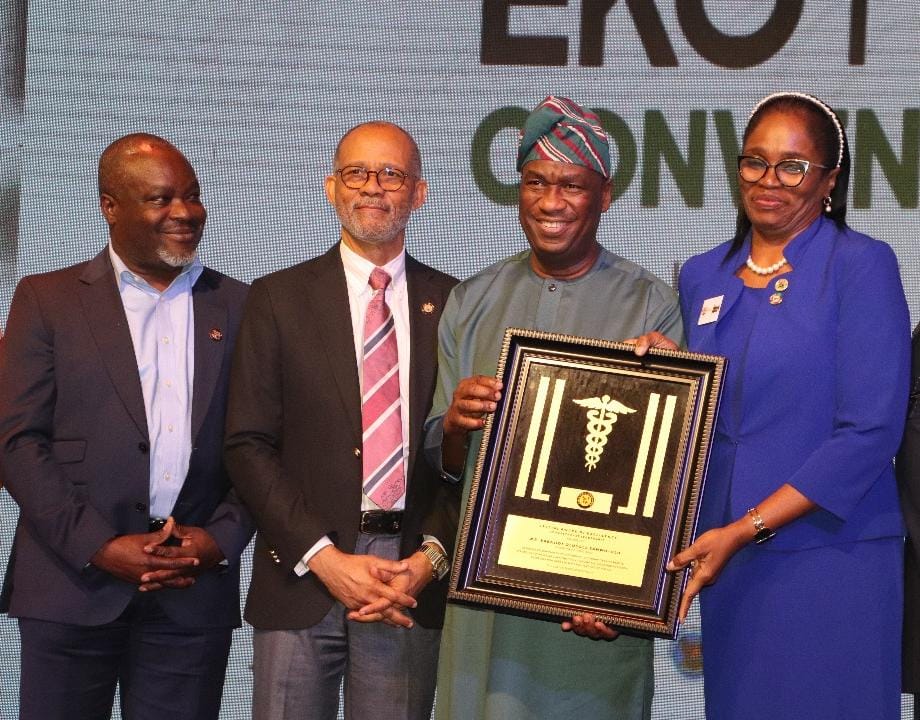
Lagos State Governor, Mr. Babajide Sanwo-Olu, on Tuesday reaffirmed his administration’s unwavering commitment to building a world-class, inclusive, and technology-driven health system, declaring that “Lagos is rewriting the story of healthcare in the 21st century.” He made the declaration while addressing stakeholders at the maiden Eko Health Convention 2025, held at The Jewel Aeida, Lekki, with the theme “Lagos Health: Driving Innovation, Strengthening Systems, Leading Change.” The convention brought together policymakers, health professionals, and development partners to review progress and chart a roadmap for future reforms.
Sanwo-Olu, who was represented by the Deputy Governor of Lagos State, Dr. Obafemi Hamzat said the state’s remarkable transformation in healthcare over the last six years reflects a combination of humility and ambition. “We promised to build a health system that is accessible, affordable, and innovative. That commitment remains firm,” he said. Highlighting milestones, he recalled the commissioning of Maternal and Child Centres in Eti-Osa, Badagry, and Epe; the creation of new general hospitals in Ojo and Somolu; and the establishment of the Lagos State Mental Health Institute at Ketu-Ejirin, describing them as “deliberate investments that will redefine secondary and tertiary care for decades.”
The Governor emphasized that Lagos’ pandemic response and investments in biosecurity infrastructure have positioned the state as a regional leader in epidemic preparedness. He noted that the Mainland Hospital, the Biobank in Yaba, and the planned International Infectious Disease Research Centre were products of foresight and partnership. “Our COVID-19 response showed that preparedness saves lives. Today, those investments are the backbone of our resilience,” he said, adding that digital tools like electronic medical records and the Lagos Smart Health Information Platform (SHIP) have modernized service delivery and data management across the state’s health ecosystem.
Speaking on the future of healthcare financing, Sanwo-Olu reaffirmed that mandatory health insurance remains central to achieving universal health coverage. He explained that the ILERA EKO scheme and the Executive Order signed in July 2024, making insurance mandatory for all residents, are vital to protecting Lagosians from financial hardship. “Without a shared pool of resources, universal coverage is impossible,” he said. The Governor also revealed plans to expand subsidies for vulnerable populations and enforce enrolment through community pharmacies and markets, targeting a 15 percent coverage rate in the coming years.
The Governor also highlighted efforts to strengthen emergency medical response and human resources for health. He announced the recruitment of over 3,000 additional staff, the creation of a dedicated paramedic cadre, and the addition of 28 new ambulances and 10 rapid-response motorbikes. “Timely and efficient emergency care must be a right, not a privilege,” he said, noting that new ambulance points and bases have been strategically sited to improve response times and link trauma centers across the state. He added that the newly inaugurated Custodian Accident and Emergency Centre in Epe stands as a lifeline for the eastern corridor.
Sanwo-Olu concluded by outlining four key priorities for the next phase of reforms — completing ongoing flagship projects, deepening digital transformation through artificial intelligence and real-time surveillance, achieving universal health coverage, and investing in people and partnerships. He urged citizens to take ownership of the state’s health goals, enroll in insurance, adopt healthy lifestyles, and support immunization campaigns. “The story of Lagos is written by all of us — in our compassion, innovation, and shared resolve to make health not just a promise, but a living legacy for generations to come,” he said.
Earlier in her welcome remarks, Special Adviser to the Governor on Health, Dr. (Mrs.) Kemi Ogunyemi emphasized the collective vision of transforming Lagos State’s health landscape through innovation, collaboration, and shared responsibility. Addressing a hall filled with policymakers, healthcare professionals, and development partners, Dr. Ogunyemi underscored that the essence of the convention was not just to deliberate, but to “create real impact on the lives of Lagosians.”
She outlined the government’s key health priorities — universal access to quality healthcare, strengthened public-private partnerships, and the empowerment of citizens to take charge of their wellbeing. “Government cannot do it alone,” she said, stressing that the active involvement of every stakeholder, from professionals to community members, was vital to achieving a sustainable health future for the state. Dr. Ogunyemi further noted that with a population representing over 12 percent of Nigeria’s total, Lagos carries an enormous health responsibility that demands strategic planning and inclusive participation.
Reiterating Lagos’ reputation as the Centre of Excellence and a pace-setter in health innovation, the Special Adviser commended the leadership of the Commissioner for Health, Prof. Akin Abayomi, and the Permanent Secretary, Dr. Olusegun Ogboye, for steering the Ministry toward a clear and purposeful vision. She urged all delegates to engage meaningfully, share solutions, and commit to actions that ensure policies translate into measurable impact. “There is no value in policy without impact,” she declared, welcoming participants to what she described as a new chapter of innovation, collaboration, and transformation in healthcare in Lagos State.
The Commissioner for Health, Professor Akin Abayomi, in his technical presentation titled “Bricks and Bytes: Infrastructure Transformation of Lagos Healthcare,” gave a detailed overview of the state’s comprehensive plan to modernize health facilities and digitize service delivery across Lagos. He revealed that the government’s health infrastructure blueprint was developed after a study tour to Malaysia, integrating sustainability, energy efficiency, and patient-centered design into new and ongoing projects.
According to Abayomi, the state’s flagship projects including the New Massey Children’s Hospital, the Iba-Ojo General Hospital, the Lagos State Mental Health Institute, and the Comprehensive Cancer Institute, represent “game-changing investments” designed to deliver world-class, climate-resilient healthcare. He noted that these facilities were built to accommodate future population growth and withstand environmental pressures while maintaining high-quality service delivery.
On digital innovation, the Commissioner announced the phased deployment of the Lagos Smart Health Information Platform (SHIP), which connects public health facilities through electronic medical records, telemedicine, and real-time data analytics. “Data is the new currency,” he said, explaining that the integration of SHIP will enable efficient management of patient care and improve health outcomes through evidence-based policy. Abayomi further disclosed plans for the establishment of a University of Medicine and Health Sciences to address the shortage of healthcare professionals, as well as LASMISO; the Lagos State Medical Industries and Innovation Centre to promote biomedical manufacturing and research within the state.
Permanent Secretary, Lagos State Ministry of Health, Dr. Olusegun Ogboye, in his presentation titled “The U in Universal Access to Healthcare,” emphasized that the true measure of Lagos’ health progress lies in ensuring that no resident, regardless of income, gender, or location is left behind. He explained that universal access represents both equity and humanity, describing it as “the discipline of making sure that even the poorest person in the most remote corner of Lagos can access quality healthcare.”
According to him, the government’s commitment to universal health coverage is reflected in its expanded health insurance schemes, improved emergency response systems, and the introduction of High Dependency Units (HDUs) across general hospitals to reduce maternal deaths.
Highlighting the building blocks of universal access, Dr. Ogboye identified financing, quality service delivery, infrastructure renewal, and system synergy as key pillars driving the ongoing reforms. He noted that the state is strengthening its health financing architecture through the Lagos State Health Management Agency (LASHMA), in alignment with the National Health Insurance Authority, to expand coverage and protect citizens from catastrophic health expenses.
He also disclosed that the state’s ambulance service, LASAMBUS, has been upgraded with motorbike ambulances, improved communication systems, and strategically located operating bases for quicker emergency response, while ongoing digital reforms now enable electronic tracking of blood supply, medicines, and logistics.
Dr. Ogboye further stated that the Ministry is deliberately tackling challenges such as low insurance enrollment, drug stock-outs, and public mistrust through targeted awareness, better logistics, and real-time service feedback systems. He revealed that the forthcoming State Health Information Exchange Platform (SHIP) will unify patient data across facilities while ensuring confidentiality and evidence-based planning. Calling for stronger collaboration among stakeholders, he urged the private sector, professionals, and citizens to align with the state’s vision for equitable healthcare delivery. “Universal Health Coverage is not just a goal, it is a discipline,” he stressed, adding that Lagos is determined to build a resilient, inclusive, and digitally connected health system that leaves no one behind.
Executive Secretary, Lagos State Blood Transfusion Service (LSBTS), Dr. Bodunrin Osikomaiya, in her stirring presentation titled “Digital Blood,” highlighted the state’s bold leap into a new era of technology-driven blood management. She explained that the recently launched HaemoCentral platform; a real-time blood inventory system, now enables traceability from donor to recipient using barcodes and QR codes, ensuring rapid mobilization and equitable distribution of safe blood across Lagos. With the innovation, Lagos can now know “at the click of a button” where blood is available and where it is most needed, guaranteeing safety, accessibility, and timeliness.
Dr. Osikomaiya further revealed that the next phase of the transformation would integrate patient data, leverage artificial intelligence for predictive blood supply analytics, and link to platforms like LagosRide to facilitate blood transport and donor mobility. “We want a Lagos where blood flows with the speed of data, where no life is lost due to delayed access,” she said, calling on citizens to embrace voluntary blood donation as a shared civic responsibility.
In his goodwill message, Dr. Dayo Adeyanju, Team Lead of the Maternal and Neonatal Mortality Reduction Innovation Initiative (MAMII), commended the Lagos State Government for its visionary leadership and impactful reforms in the health sector. He announced that Lagos would soon serve as a pilot site for an ambitious federal initiative that provides pregnant women with Mama Kits, free caesarean sections in 21 obstetric centres, and emergency transportation for women in labour. Dr. Adeyanju reaffirmed the Federal Government’s commitment under President Bola Ahmed Tinubu to support Lagos in developing a comprehensive roadmap to reduce maternal and neonatal mortality. “No woman should die while giving life, and every child born in Lagos must live beyond five years,” he declared, pledging closer collaboration between federal and state actors in safeguarding maternal and child health.
For Advert, Event Coverage/Press Conference Invite, Story/Article Publication & Other Media Services
Contact Us On WhatsApp
Send Email To: citizennewsng@gmail.com
Visit Citizen NewsNG To Read More Latest and Interesting News Across Nigeria and the World