







 Citizen NewsNG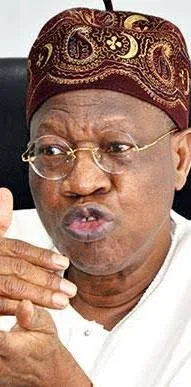
Lai Mohammed, former minister of information and culture, has condemned the high cost of contesting political office in Nigeria.
Speaking at the London School of Economics and Political Science on Saturday, Mohammed said that the cost of participating in politics in Nigeria is costlier than in many countries, adding that the electoral process requires urgent reforms to make the system more accessible.
The former minister highlighted the financial burden placed on many aspirants while contesting various offices.
“The field of politics in Nigeria is open for young and ambitious people. However, politics in Nigeria is more expensive than in other parts of the world. That is also a factor we must work at. Two days ago, the ruling party released its timetable and schedule of activities for the 2027 general election,” Mohammed said.
“If you want to become president, you will pay N70m for the nomination form and N30m for the expression of interest form. That is N100m, which is £50,000. If you want to be a governor, the nomination form is N40m, while the expression of interest is N10m. That is about £25,000.
“If you want to be a senator, the nomination form is N17m while the expression of interest is N3m. That is about £10,000.”
He explained that the high cost of contesting is due to how parties are funded in Nigeria, stressing that funding through membership dues is not sustainable.
“So, it is a bit expensive even to enter into the race, and that is one area we need to work at. Yes, it is the only way the party makes money and develops the party; unlike in the UK or elsewhere, people don’t pay their membership dues, and we have no mechanism to ensure they pay. So, we wait for them. When it is time for elections, they come and buy form and then we make a lot of money to run the party,” he said.
Mohammad stated that young Nigerians are finding their way into politics despite the financial barrier.
“But really, I think there is a level playing field if you know the rules, and I said there are many young people who have no political antecedents who are today doing very well in Nigerian politics and government,” he noted.
On priorities during his tenure as minister, Mohammed said that he adopted various strategies to ensure public communication and engagement between government officials and citizens.
“My main priorities as minister of information and culture were to devise imaginative and innovative strategies to convey to Nigerians the programmes and the policies of the government. But more importantly, to get feedback from them. I realised that until you get feedback from the people, you are not going to really address their real issues. So as much as speaking is good, you must also listen, and when you listen, you get the sentiments of the people,” the former minister said.
“I used several strategies to achieve this. I used town hall meetings. My form of town hall meetings was to look at themes such as infrastructure, security, agriculture, food security, and then invite ministers in charge of these ministries for a no-holds-barred interaction with selected people from the public. We also used the scorecard series. This was used to allow ministers at the tail end of our tenure to give an account of their stewardship.”
By Theophilus Adedokun
For Advert, Event Coverage/Press Conference Invite, Story/Article Publication & Other Media Services
Contact Us On WhatsApp
Send Email To: citizennewsng@gmail.com
Visit Citizen NewsNG To Read More Latest And Interesting News Across Nigeria And The World