







 Citizen NewsNG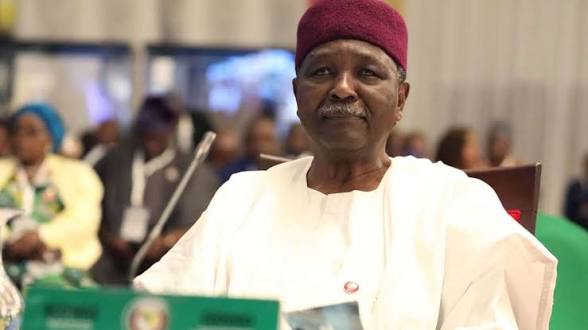
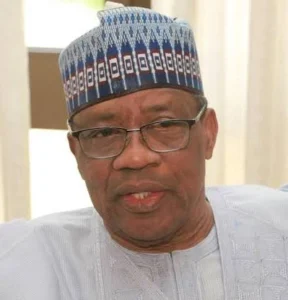
Former Head of State, Gen. Yakubu Gowon (retd.), said the officer he personally appointed to protect his life, Lt. Col. Joseph Garba, Commander of the Federal Guards Unit, was among those who orchestrated his overthrow in the July 1975 coup.
He said Garba had sworn to him, days before the putsch, that he had no knowledge of any plot against his government.
The account is contained in Gowon’s 859-page autobiography, _My Life of Duty and Allegiance_, which our correspondent obtained at the book’s launch in Abuja on Tuesday. It details the former Head of State’s personal account of the 1975 coup.
Gowon described the event as the deepest personal betrayal of his public life, because it was executed by men he had elevated on the basis of trust—and, in Garba’s case, family ties.
The book was launched at a ceremony attended by President Bola Tinubu, represented by Vice President Kashim Shettima; former President Goodluck Jonathan; senior government officials; military veterans; and other public figures.
Gowon narrated how his Chief Security Officer and head of the Special Branch, M.D. Yusuf, had warned him that some officers were planning a coup ahead of the OAU summit in Kampala, Uganda. Yusuf identified two key figures: Garba, then Commander of the Federal Guards Unit, and Anthony Ochefu, then Provost Marshal of the Nigerian Military Police.
The former Head of State noted that the warning placed him in an acute dilemma.
He had appointed Garba to the most sensitive position in his security architecture—the elite unit whose sole mandate was the physical protection of the Head of State.
He also noted that Garba’s appointment as head of the Brigade of Guards was partly influenced by family ties and the confidence he had in him.
“As Commander of the Federal Guards, the elite unit entrusted with the responsibility of protecting the person of the Head of State, Garba was supposed to have unquestionable loyalty.
“Not only did I intimately know both men, but I had also grown to like and trust them over the years.
“Coincidentally, both were Christians and from my original home state, Benue Plateau,” he recounted.
Rather than act on Yusuf’s intelligence immediately, Gowon chose to confront Garba directly—a decision that, in retrospect, he said gave the conspirators the time they needed.
Gowon recalled: “In quick succession, he vehemently denied awareness of any plan to topple me and swore by heaven and earth that no such group existed and that he was not a member of any.
“But I made him realize that if, at the end of the day, there was any truth in the rumour of his involvement in any plan against me, he would be answerable to God and his conscience.”
According to him, his suspicions grew because of the behavior of Ochefu, the second officer Yusuf had named.
He said Ochefu’s refusal to return to Lagos heightened his suspicion that the coup plot might indeed be real, though he decided to revisit the issue after returning from Kampala, unaware that he would never return as Head of State.
“His uncharacteristic yet deliberate act of gross disloyalty made me sense the plot might be true.
“I made a note to revisit the issue on my return from Kampala,” Gowon wrote.
Despite the warning, he proceeded to the 12th Summit of the Organisation of African Unity in Kampala, as he had already committed to attend.
Travelling aboard a Nigerian Airways Boeing 737 on July 27, 1975, Gowon said he remained uneasy throughout the journey.
As a precaution, he instructed his Aide-de-Camp, Mr. Walbe, to return to Lagos to monitor developments and report back.
However, Walbe, he said, could not make it back on time because the co-pilot had reportedly fallen sick.
Gowon said he was seated at the conference on July 29, 1975, when the then Ugandan leader, Idi Amin, approached him with a Reuters dispatch announcing that his government had been toppled.
He said the dispatch was how he learned that he was no longer in power.
According to him, “I did not recognize the garbled name on the Reuters dispatch. Early media reports mentioned a certain ‘Colonel Darwa’ as the officer who made the dawn broadcast of the coup.
“‘Darwa’ certainly sounded and read like a mispronounced or misspelt ‘Garba’. Still, I was not inclined to believe that he, of all people, would betray me.”
Gowon said he suspected that Garba may have been either coerced or deceived into joining the coup plot.
“My concern for Garba was based on fears that the planners of the coup may have co-opted him into their scheme against his better judgment.
“I felt they might have convinced or threatened him into believing he had gained nothing from his long association with me and, as such, was better off being in their camp—failing which he could be shot if need be,” he explained.
Credit: Punch Newspaper
For Advert, Event Coverage/Press Conference Invite, Story/Article Publication & Other Media Services
Contact Us On WhatsApp
Send Email To: citizennewsng@gmail.com
Visit Citizen NewsNG To Read More Latest And Interesting News Across Nigeria And The World