







Lagos Overhauls Fever Care Protocols As Malaria Drops To 5% Of Cases | Citizen NewsNG
 Citizen NewsNG
6 min read
Citizen NewsNG
6 min read
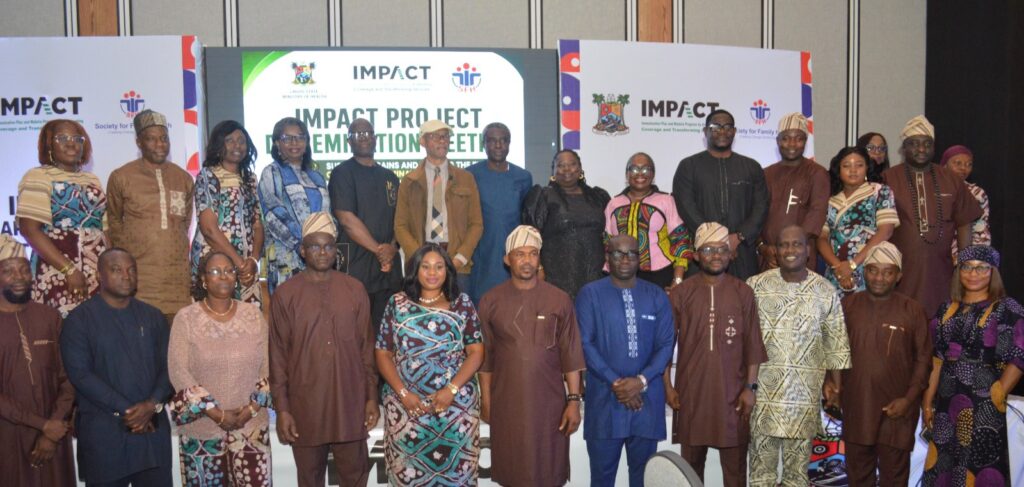
Lagos State Government has declared a major shift in the management of fever, announcing that only about five per cent of fever cases in the state are caused by malaria and directing healthcare providers to embrace evidence-based diagnosis before treatment.
The declaration was made by the State Commissioner for Health, Prof. Akin Abayomi, at the dissemination meeting of the Immunization Plus and Malaria Progress by Accelerating Coverage and Transforming Services (IMPACT) Project held at The Legend Hotel, Ikeja, where stakeholders reviewed the achievements of the World Bank-supported initiative implemented by the Society for Family Health (SFH) in partnership with the Lagos State Ministry of Health.
Abayomi said the evidence generated through the project had fundamentally changed the understanding of fever management in Lagos and would redefine clinical practice across Nigeria and West Africa. He described the event as “the beginning of a new chapter” rather than the end of a project.
The Commissioner commended the Society for Family Health, the World Bank and technical partners for generating credible evidence that supports policy decisions, stressing that the findings would guide future health interventions in the state. He praised malaria expert, Prof. Wellington Oyibo, for presenting data that clearly demonstrated Lagos’ unique malaria epidemiology based on studies conducted during the Impact Project.
According to him, the longstanding practice of equating every fever with malaria has resulted in widespread misdiagnosis and delayed treatment of other illnesses. “For far too long, fever has automatically been equated with malaria. Good clinical practice begins with listening carefully to the patient’s history, conducting a thorough examination and using appropriate diagnostic tools before reaching a conclusion,” he said.
Abayomi disclosed that following the study findings, Lagos directed all public primary and secondary health facilities not to treat malaria unless patients tested positive through Rapid Diagnostic Tests (RDTs). He said subsequent inspections of health facilities confirmed a sharp decline in malaria diagnoses, validating the effectiveness of the new policy.
He recounted tragic cases of patients who died after being repeatedly treated for malaria despite consistently testing negative, warning that assumptions in clinical practice could be fatal. “Today, I believe we are ushering in a new era in Lagos State, and indeed in Nigeria – where fever management will be guided by evidence rather than assumptions, where diagnosis will precede treatment, and where better clinical practice will ultimately save more lives,” the Commissioner stated.
Group Chief Executive Officer of the Society for Family Health Group, Dr. Omokhudu Idogho, said the dissemination meeting was an opportunity to account for investments, celebrate partnerships and chart a sustainable pathway for malaria elimination beyond donor funding.
Idogho explained that the project supported malaria diagnosis for more than two million patients across 314 public and 289 private health facilities while providing free treatment for over 50,000 confirmed malaria cases. He added that malaria test positivity declined significantly from 43 per cent to 29.2 per cent during implementation.
He stressed that the project’s greatest achievement was changing clinical behaviour by promoting testing before treatment. “Not every fever is malaria. Treating every fever as malaria can lead to missed diagnoses, inappropriate use of medicines and poor patient outcomes,” he said, urging sustained investment in quality diagnosis, surveillance, public-private collaboration and government ownership.
Earlier, Permanent Secretary, Lagos State Ministry of Health, Dr. Dayo Lajide, represented by Acting Director, Disease Control, Dr. Abosede Wellington, said the project had strengthened malaria prevention, diagnosis, treatment and immunisation services across all 20 Local Government Areas and 37 Local Council Development Areas of the state.
She noted that Lagos had reduced malaria prevalence to about 2.6 per cent in 2025, positioning the state firmly on the path to malaria pre-elimination. According to her, sustained investments in diagnostics, healthcare worker capacity development and surveillance have significantly improved health outcomes for residents.
Delivering a goodwill message, World Bank Task Team Leader and Senior Health Specialist, Dr. Onoriode Ezire, praised Lagos for generating evidence that is shaping health policy nationally, describing the findings on non-malaria fevers as a major contribution to public health.
Ezire said community engagement remained one of the project’s greatest strengths, recalling how grassroots health education using simple communication tools continues to transform health outcomes decades after his own experience in community mobilisation during national service. He added that the project’s Grievance Redress Mechanism had strengthened accountability by giving communities a voice in programme implementation.
In his technical presentation, renowned malaria researcher Prof. Wellington Oyibo said the study confirmed that malaria test positivity among fever patients in Lagos was approximately five per cent, while microscopy findings showed only about 2.4 per cent positivity.
Oyibo stated that quality-assured Rapid Diagnostic Tests demonstrated about 98.5 per cent sensitivity, making them reliable for routine malaria diagnosis across the state. He added that the findings provided the scientific basis for malaria elimination planning and reinforced the need for stronger surveillance, research and multidisciplinary collaboration.
Alos Speaking at the event, Managing Director, SFH Advisory Services, Dr. Jennifer Anyanti, said the IMPACT Project extended beyond malaria diagnosis and treatment to include the procurement of essential antimalarial medicines, Rapid Diagnostic Test (RDT) kits, healthcare waste management commodities and the establishment of a Grievance Redress Mechanism across all wards in Lagos State. She explained that the project also strengthened the capacity of healthcare workers, community providers, traditional and religious leaders, as well as Mothers Against Malaria Agents, who championed malaria awareness and prevention campaigns in schools and communities, including hard-to-reach riverine areas.
Anyanti noted that the project’s collaboration with the Pharmacy Council of Nigeria ensured that Patent and Proprietary Medicine Vendors and community pharmacists were trained to test before treating malaria in line with national regulations. She said the intervention has significantly improved access to Rapid Diagnostic Test kits at community pharmacies and PPMVs across Lagos, assuring stakeholders that the Society for Family Health would continue supporting these frontline providers even after the formal transition of the project to the Lagos State Government.
Presenting the Lagos Malaria IMPACT Story, State Malaria Elimination Programme Project Manager, Dr. Abimbola Oshinowo, highlighted major achievements recorded under the project, including the training of 1,279 healthcare workers on malaria case management across 343 public health facilities.
She said malaria testing coverage increased to 98.3 per cent, while uptake of Intermittent Preventive Treatment in Pregnancy rose from 25 per cent to 93 per cent. Community mobilisation activities also reached more than 1.38 million residents, while mass media campaigns delivered malaria prevention messages to over 10 million people.
Oshinowo noted that the project established Grievance Redress Mechanism committees in all 20 LGAs, resolved 362 complaints without escalation and significantly improved malaria reporting rates across public and private facilities.
Executive Secretary, Health Facility Monitoring and Accreditation Agency, Dr. Victoria Egunjobi, said the project had empowered healthcare workers with evidence to confidently reassure patients that not every fever was malaria.
Egunjobi added that the widespread adoption of Rapid Diagnostic Tests would improve clinical decision-making and strengthen healthcare delivery across Lagos. She congratulated the Lagos State Ministry of Health, SFH, the World Bank and all implementing partners for the successful execution of the project.
Stakeholders at the meeting agreed that sustaining the gains recorded under the IMPACT Project would require continued investment in healthcare worker capacity, stronger surveillance systems, uninterrupted commodity supply, community engagement, environmental sanitation and sustained government leadership.
The dissemination meeting concluded with a renewed commitment by government, development partners and healthcare stakeholders to institutionalise evidence-based malaria case management and accelerate Lagos State’s journey towards malaria pre-elimination.
For Advert, Event Coverage/Press Conference Invite, Story/Article Publication & Other Media Services
Contact Us On WhatsApp
Send Email To: citizennewsng@gmail.com
Visit Citizen NewsNG To Read More Latest And Interesting News Across Nigeria And The World