







 Citizen NewsNG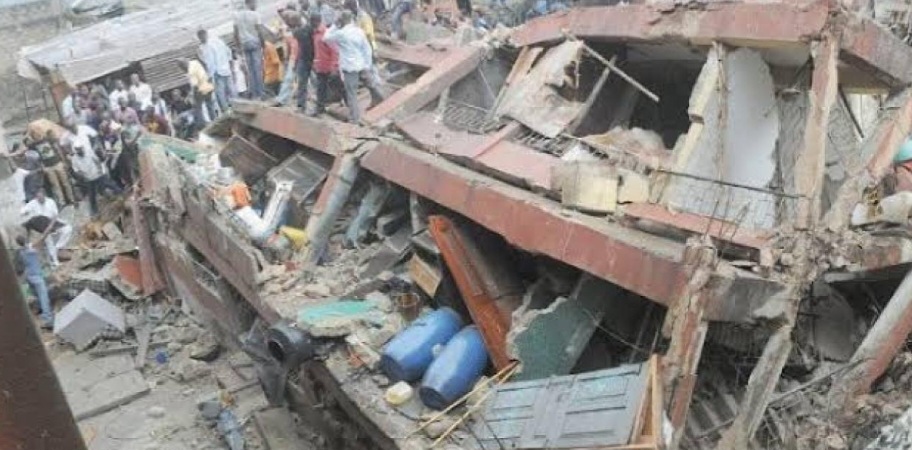
Lagos State, Nigeria’s economic hub, is facing a persistent building safety crisis. In the megacity, home to an estimated 20 million people, skyscrapers rise alongside sprawling informal settlements, while building collapses continue to claim lives with alarming regularity.
The rapid pace of construction, coupled with alleged negligence and weak enforcement, has turned parts of the city’s building boom into a recurring source of tragedy.
Building collapses in Lagos have become emblematic of a wider crisis involving alleged negligence, regulatory failures and impunity. Structures meant to provide homes, businesses and livelihoods have repeatedly collapsed, trapping and killing residents, workers and passers-by, while questions over accountability often remain unresolved.
From 2017 to mid-2026, families have mourned loved ones who were killed in building collapses across the state, while allegations of professional negligence, regulatory lapses and non-compliance with building standards have continued to surface.
Data compiled from multiple sources, including official reports, academic studies and statements by government agencies, points to a persistent pattern of building collapses in Lagos over the past decade.
The recurring incidents have raised concerns about construction practices, regulatory enforcement and the effectiveness of measures introduced to prevent unsafe buildings.
The crisis goes beyond individual tragedies. Repeated collapses point to systemic weaknesses that allow potentially dangerous construction practices to persist, raising questions about the responsibilities of developers, building professionals, regulatory agencies and government authorities.
Despite demolition exercises and public statements by agencies such as the Lagos State Building Control Agency (LASBCA) and the Lagos State Emergency Management Agency (LASEMA), building collapses and their attendant casualties continue to occur. The persistence of the problem has intensified calls for stronger enforcement, greater transparency and accountability for those responsible for unsafe construction.
Data-Driven Crisis
Obtaining a comprehensive and transparent official record of building collapses and related deaths in Lagos remains challenging, with figures often varying across government agencies, media reports and independent studies.
However, data compiled and cross-referenced from several sources indicates that Lagos has recorded dozens of building collapses since 2017, underscoring the scale and persistence of the problem.
An analysis by Estate Intel, which examined historical patterns, found that Lagos accounted for an average of about 4.8 percent of building collapses annually during the five-year period preceding the early 2020s, with incidents continuing to be recorded in subsequent years.
“The most affected regions are Lagos Island and Ebute-Metta areas due to old and dilapidated buildings,” the report stated. “Poor construction is the primary cause, accounting for 36% of collapses.”
Broader compilations indicate 129 collapses between 2011 and 2022, with the majority falling in the post-2017 era, placing Lagos as accounting for a majority of Nigeria’s building failures.
“In our analysis of collapsed buildings between 2017 and 2022, we found that there was a wide range of causes of a collapse, from gas explosions to heavy downpour of rain, and even old and dilapidated buildings,” the report said.
“However, the most popular cause of the building collapse was poor construction, accounting for 36% of the collapses. Old buildings accounted for the second-highest reason for collapse, accounting for 20%.
“In all these instances, the overarching trend was the lag on the part of the responsible agency, which ought to uphold construction standards, as well as enforce the regulations.”
In 2024 alone, at least 19 building collapses were documented by mid-year, and 2026 has already seen fresh disasters, including the deadly June incident in Alakija where nine people were killed and 27 others rescued with varying degrees of injuries.
building collapse in lagos
The Council for the Regulation of Engineering in Nigeria (COREN) highlighted at least 90 building collapses in Lagos in the past 10 years, cementing the city’s reputation as Nigeria’s “building-collapse capital.”
Deaths paint an even grimmer picture. Nationally, building collapses have claimed over 1,600 lives since the 1970s, with Lagos accounting for a staggering 54% in some aggregates.
In Lagos specifically, post-2012 data from studies showed over 337 deaths from at least 44 collapses up to the early 2020s.
Cumulative estimates for recent periods exceed 350-500 deaths linked directly to these failures, alongside hundreds of injuries and thousands displaced. Property losses run into trillions of naira.
Major Incidents Underscore The Toll
In November 2021, a 21-storey luxury building under construction collapsed in Ikoyi, killing at least 42-45 people. The site remains a scar, with investigations allegedly suppressed. In March 2019, a primary school building collapse killed about 20 people.
In June 2026, in Alakija, Satellite Town, a three-storey residential building crumbled, killing at least nine people, including an eight-month-old child and a two-year-old child, despite reported prior warnings about structural weaknesses of the building.
Documented Causes Of Serial Building Collapses In Lagos
There have been documented causes of building collapses in Lagos, ranging from poor construction, which accounts for 36% in the sampled 2017-2022, to substandard materials, illegal addition of floors, quack professionals, and construction on unstable, subsidence-prone land near lagoons and creeks. Climate factors and groundwater extraction worsen risks.
Mapping Death Traps Across Lagos
Collapses are not random; they cluster in vulnerable zones due to aging infrastructure, poor soil, overcrowding, and unregulated development.
An area of 5–81 km2 and 255–4,000 buildings are exposed to a high to very high risk of collapse for short‐term (10 years) to long‐term (75 years) periods, according to a report published in the National Library of Medicine by PubMed Central (PMC).
“Differential land subsidence can trigger building collapse, and the data presented here will enable authorities to create adequate building codes and standards and devise mitigation strategies.”
Lagos Island and Ebute-Metta top the list, burdened by dilapidated colonial-era and post-independence buildings often illegally expanded.
These areas have seen the highest frequency, prompting reactive measures like temporary height bans on new constructions above three floors in Ebute-Metta.
Other high-risk local government areas include Ajeromi, Alimosho, Amuwo-Odofin, Eti-Osa, Ikorodu, Kosofe, Mushin, Ojo, Oshodi-Isolo, Shomolu, and Surulere.
Scientific risk mapping using land subsidence data identifies significant high- and very-high-risk zones across these LGAs, potentially affecting hundreds of buildings and thousands of residents. Proximity to water bodies correlates strongly with failures.
Studies found that 80% of historical collapses occurred in areas close to the Lagos Lagoon and creeks, highlighting environmental negligence by planners, developers, and regulatory authorities.
This geographic concentration reflects deeper failures in urban planning and enforcement by the Lagos State Physical Planning Permit Agency (LASPPPA) and LASBCA, which approve plans and conduct inspections, but often fall short amid alleged bribery and resource shortages.
Zero Convictions For The Guilty
If the collapses represent criminal negligence, the response represents institutionalized protection of the elite.
The number of prosecutions and convictions for those directly responsible for deadly collapses is effectively little or absolutely zero.
LASBCA officials conceded on record two years ago that, to their knowledge, there had been no prosecutions linked to building collapse incidents.
“To my knowledge there haven’t been any prosecutions in the past as far as building collapses in Lagos are concerned,” LASBCA’s spokesperson Olusegun Olaoye admitted in September 2024.
“I know the statistics are worrying, but there are ongoing efforts to halt the trend,” he said, according to a report by the BBC.
To date, there is still no official report or record of either ongoing prosecution or conviction of developers, building owners, or regulatory officials linked to building collapse incidents in Lagos.
While the agency and courts have secured convictions for general building code violations, such as 53 persons in one documented period for minor infractions under the Lagos State Urban and Regional Planning and Development Law, the masterminds behind fatal disasters escape unscathed.
The 2021 Ikoyi inquest delivered a blistering coroner’s judgment attributing the disaster to irresponsibility and negligence by approving and supervising agencies.
Yet the comprehensive investigation report has reportedly languished with the governor’s office, shielded from public view.
No high-profile convictions followed. Similar patterns repeat across incidents: announcements of probes, followed by silence
The Real Estate Development Association of Nigeria (REDAN) Chairman Tony Aspire Kolawole publicly decried the reliance on demolitions without criminal sanctions, stating that “demolition alone is not justice” and urging prosecution of developers, contractors, consultants, and complicit officials.
Political influence is repeatedly cited as the shield. An anonymous Lagos politician told the BBC in 2024, “If you are connected to people in power, even if you are the culprit, nothing will happen to you.”
With only around 300 building inspectors for the entire state, when experts argue for thousands, with at least 100 per local government area, the system is designed to fail.
Labourers admit to on-the-job “training” without qualifications, using substandard cement and rods to cut costs.
‘Lives Shattered By Greed And Neglect’
The statistics represent shattered families. Earlier in 2026, following a collapse incident at Alakija, rescue operations recovered nine bodies from the rubble of the collapsed three-storey building that residents told SaharaReporters showed visible cracks weeks earlier and alleged official warnings.
SaharaReporters observed directly, and survivors described the horror of hearing screams from the rubble as emergency responders battled to save the trapped victims.
Survivor accounts from an incident, like the story of drinks seller Sunday Femi, detail rushing into the dust only to find colleagues and acquaintances dead.
“Like many, I rushed inside trying to see if I could help some of the people trapped. Sadly, I knew some of those who died, and I think about it every day,” he recounted.
Families of victims continue demanding justice years later, with little response.
Broader impacts include economic devastation for small businesses, displacement of over 6,000 households in longer-term data, and psychological trauma.
Children lose parents; workers lose limbs or lives for daily wages. The cycle perpetuates poverty, as affected communities rebuild haphazardly or remain in fear.
Root Causes
At the core is a toxic nexus. Rapid urbanization drives demand, but regulators are under-resourced and allegedly compromised.
Standards Organisation of Nigeria (SON) fails to police materials. Quack engineers and “mason-turned-contractors” thrive due to weak certification enforcement.
Land subsidence studies link geological vulnerabilities to increased failures, yet development continues unchecked in high-risk zones.
Previous administrations, including under former Governor Akinwunmi Ambode and current Governor Babajide Sanwo-Olu, have launched initiatives, stricter laws in 2019, demolition drives, and task forces, but implementation is cosmetic as a result of vested interests undermining these efforts.
Nationally, the pattern mirrors Lagos, but the commercial capital’s scale makes it the epicentre. Calls for a state of emergency on building safety, mandatory insurance, independent forensic units, and whistleblower protections go unheeded.
SaharaReporters’ efforts to get verifiable records of the number of building owners, developers, contractors, structural engineers, government officials, or other professionals who have been investigated, prosecuted, or convicted over fatal building collapse incidents in Lagos State from 2017 to date from the state government failed.
The Lagos State Commissioner for Information, Gbenga Omotoso, and Gboyega Akosile, Chief Press Secretary to Governor Sanwo-Olu, had not responded to requests for comments nor to calls placed to their mobile phone numbers, as of the time of filing this report.
For Advert, Event Coverage/Press Conference Invite, Story/Article Publication & Other Media Services
Contact Us On WhatsApp
Send Email To: citizennewsng@gmail.com
Visit Citizen NewsNG To Read More Latest And Interesting News Across Nigeria And The World