








 Citizen NewsNG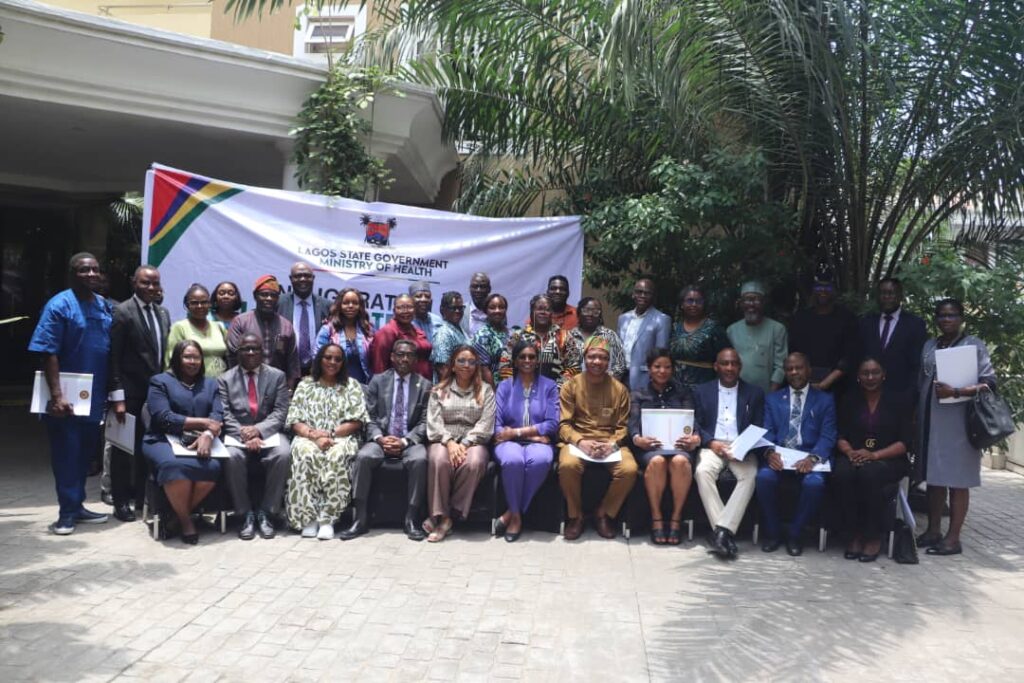
Lagos State Government has inaugurated a 39-member Task Force on Clinical Governance and Patient Safety, becoming the first state in Nigeria to domesticate the national initiative aimed at strengthening standards of care, accountability and patient safety across the health system. Inaugurating the Task Force on Monday at Sojourn by Genesis Hotel, Ikeja, Commissioner for Health, Professor Akin Abayomi, said the initiative was critical to safeguarding patients and healthcare workers while improving the quality of care across both public and private facilities.
Abayomi said Lagos could not continue to focus predominantly on government-owned facilities when the State’s health ecosystem is dominated by private providers, noting that there is approximately a 10-to-one ratio of private to government health facilities. He, however, observed that government facilities account for up to 40 per cent of patient encounters, placing considerable pressure on public infrastructure and health workers. “We are not the Ministry of Health for government facilities alone; we are the Ministry of Health for Lagos,” he said, stressing the need for a system-wide approach to clinical governance.
The Commissioner also called for stronger oversight of the informal and unorthodox health sector, including traditional medicine practitioners, patent medicine vendors and community pharmacies, particularly as task-shifting and task-sharing become increasingly important in addressing human-resource shortages. He said clinical governance must promote clinical audit, evidence-based medicine, digital tools and continuous professional development, while also protecting health workers from violence. Abayomi identified fever management as a potential pilot, saying Lagos must move away from presumptive malaria treatment as malaria declines in the State. “It is no longer appropriate to make a clinical diagnosis of malaria without appropriate testing,” he said.
The Special Adviser to the Governor on Health and Chairman of the Task Force, Dr. Kemi Ogunyemi, said the initiative was designed to provide a single platform for setting standards of care, strengthening patient safety and holding the health system accountable for the quality of services provided to residents. According to her, the Task Force will develop a Lagos State Clinical Governance and Patient Safety Framework covering minimum standards for facilities, incident reporting and learning, patient feedback and redress, as well as indicators and structures for statewide implementation. “Behind every incident report is a person who came to us for help,” Ogunyemi said.
Ogunyemi said the Task Force would work through seven pillars: leadership and governance, clinical effectiveness, risk management, patient and public involvement, clinical audit, staff development and management, and information management. She explained that each pillar would have a subcommittee with dedicated leadership and secretarial support, while members could contribute to up to three pillars according to their expertise. She added that the three-month assignment would build on existing State and national policies and identify gaps where appropriate policies or systems were absent.
The Special Adviser said the broad representation of the Task Force was deliberate, bringing together government institutions, professional associations, private-sector providers, civil society, subject-matter experts and other stakeholders to ensure that the framework could work across Lagos’ complex health system. She stressed that the exercise was not intended to impose arbitrary standards but to use evidence to determine appropriate standards for the State. “We are not seeking to dictate standards. We are using the best available evidence to determine what is appropriate for Lagos State and what will ensure that patients are safe,” she said.
She linked the emergence of the State Task Force to the national conversation on clinical governance and patient safety following the highly publicised death of a celebrity’s son in a private health facility, which generated widespread criticism of Nigeria’s healthcare system. Ogunyemi, who serves on the National Task Force, said the experience demonstrated that the challenges were not peculiar to Lagos but required structured action at national and subnational levels. She said Lagos’ existing regulatory experience through the Health Facility Monitoring and Accreditation Agency (HEFAMAA) provided an important foundation for the State’s domestication of the initiative.
Ogunyemi said the ultimate objective was to ensure that patients entering Lagos health facilities encounter safe environments, competent professionals and reliable processes capable of detecting failures and preventing their recurrence. She said existing initiatives would not be discarded but strengthened and coordinated under the new framework. “The objective is not to change the way the system works for the sake of change,” she said, adding that the State would build on what was already working while addressing gaps in clinical governance and patient safety.
Permanent Secretary, Lagos State Ministry of Health, Dr. Dayo Lajide, described the inauguration as timely, noting that it followed the national direction of the Federal Ministry of Health and Social Welfare and positioned Lagos among the first states to establish a dedicated clinical governance and patient safety platform. She said the presence of the Ministry’s directorates and agencies, tertiary and general hospitals, professional associations, private-sector representatives, subject-matter experts and civil society demonstrated the breadth of the initiative. “Clinical governance is that discipline that makes the expectation a property of the system, rather than a matter of individual conscience,” Lajide said.
Lajide charged members to accept the responsibility attached to their appointment, actively participate in their assigned pillars and adhere to the Task Force’s terms of reference and three-month timeline. She assured them that the Ministry would provide a technical secretariat to coordinate documentation, administration and continuity throughout the exercise. She said the recommendations produced by the Task Force would help shape the future of healthcare delivery in Lagos and promote a stronger culture of patient safety.
In his presentation on the Seven Pillars of Clinical Governance and Objectives of the Taskforce, the Permanent Secretary, Health Service Commission, Dr. Olufemi Omololu, said clinical governance would consolidate several quality-improvement initiatives already operating across Lagos, including the Service Charter, Clinical Quality Improvement, Total Quality Management, 5S and Maternal and Perinatal Death Surveillance and Response (MPDSR). He described clinical governance as a systematic framework for ensuring safe, effective, patient-centred, accountable and continuously improving healthcare, noting that its seven pillars would provide the basis for developing uniform standards across the State.
Omololu said the framework would promote standard treatment guidelines, clinical audits, incident reporting, patient feedback, staff development and effective use of health information. He emphasised that clinical governance must not become a punitive mechanism, citing the “no name, no blame” approach under MPDSR as an example of how health workers could be encouraged to report problems and participate in finding solutions. He added that the system must ultimately become part of institutional culture rather than remain dependent on individual Medical Directors or temporary programmes.
Technical Secretary of the Task Force, Dr. Tolu Ajomale, said immediate activities would include completion of members’ pillar sign-up and data forms, nomination of chairpersons and deputies for the seven pillars, allocation of secretaries and creation of communication platforms for each workstream. He said each pillar would commence its assignment immediately, with a three-month work period for producing findings and recommendations.
Ajomale also proposed monthly plenary meetings to enable representatives of the seven pillars to review progress and maintain coordination across the workstreams. He said the next physical meeting would hold in approximately one month, when each pillar would present an update on activities undertaken. He urged members to complete the required documentation promptly to ensure that the Task Force begins its substantive work without delay.
The 39-member Task Force brings together key actors across Lagos’ health system, reflecting the State’s public-private and multidisciplinary approach to clinical governance. Membership includes Commissioner for Health, Prof. Akin Abayomi; Special Adviser on Health, Dr. Kemi Ogunyemi; Permanent Secretary, Ministry of Health, Dr. Dayo Lajide; Permanent Secretary, Health Service Commission, Dr. Olufemi Olomolu; Permanent Secretary, Primary Healthcare Board, Dr. Ibrahim Mustafa; Permanent Secretary, LASHMA, Dr. Emmanuella Zamba; representatives of HEFAMAA, LASUTH, LSBTS, LASAMBUS and LASEMS; and experts in clinical governance, surgery, obstetrics and gynaecology, pharmacy and infection prevention and control. The Task Force also includes representatives of the Medical Guild, NANM, PSN, JOHESU, private medical and nursing practitioners, Healthcare Federation of Nigeria, civil society, legal services and other relevant stakeholders.
The inauguration marks a significant step in Lagos State’s efforts to move from fragmented quality-improvement initiatives to a coordinated and institutionalised clinical governance system. With the Task Force expected to produce a State Clinical Governance and Patient Safety Framework within three months, the initiative is aimed at embedding evidence-based standards, accountability, incident learning, patient feedback, staff development and data-driven decision-making across public and private healthcare facilities, ultimately strengthening public confidence and ensuring that every patient who seeks care in Lagos receives safe and quality service.
For Advert, Event Coverage/Press Conference Invite, Story/Article Publication & Other Media Services
Contact Us On WhatsApp
Send Email To: citizennewsng@gmail.com
Visit Citizen NewsNG To Read More Latest And Interesting News Across Nigeria And The World