







Lagos Partners UNAIDS To Boost Data Quality For Long-Term HIV Control | Citizen NewsNG
 Citizen NewsNG
3 min read
Citizen NewsNG
3 min read
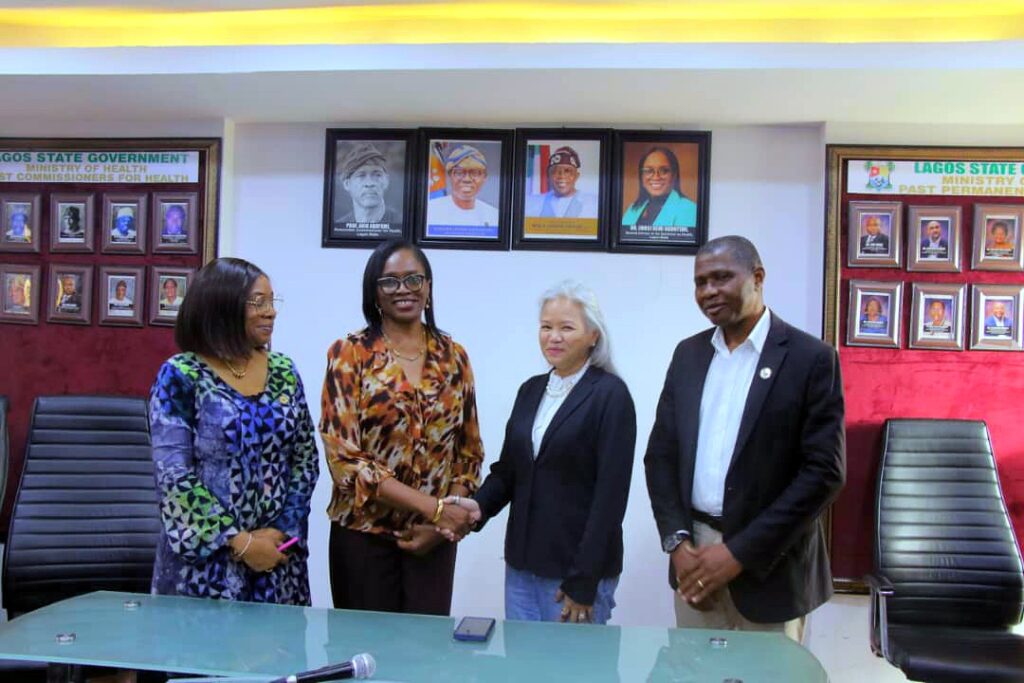
The Lagos State Government and the Joint United Nations Programme on HIV/AIDS (UNAIDS) have identified improved data systems, stronger community engagement and innovative partnerships as critical to sustaining the state’s HIV response amid declining external funding.
The Special Adviser to the Governor on Health, Dr. (Mrs.) Kemi Ogunyemi, disclosed this on Monday 21st September, during a courtesy visit by the UNAIDS Country Director, Ms. Krittayawan “Tina” Boonto, to the Lagos State Ministry of Health. Ogunyemi said while available indicators showed a positive downward trend in HIV positivity from 2025 to the first quarter of 2026, weaknesses in data collection remained a major challenge.
She explained that the state needed to distinguish between newly diagnosed cases and newly acquired infections, noting that inadequate systems for separating previously diagnosed persons from newly identified cases could lead to misinterpretation of HIV figures. According to her, reliable data was essential for targeting interventions, allocating resources and making a strong case for funding.
Ogunyemi also called for greater emphasis on prevention and community-based interventions, particularly among young people. She advocated integrating HIV prevention into family planning and other sexual and reproductive health conversations, stressing that communities and people who understand local realities should play a greater role in communicating prevention messages without stigmatising or frightening residents.
She said Lagos’ division of its primary healthcare system into six districts would provide an opportunity to better understand the peculiar health needs of different areas and direct programmes and resources accordingly. Ogunyemi further encouraged UNAIDS to explore lessons from Thailand’s HIV response, including possible technical cooperation and city-to-city exchanges, saying successful approaches could be assessed for adaptation to the Lagos context.
The UNAIDS Country Director, Boonto, said Lagos was strategically important to the HIV response because of its large and diverse population, adding that UNAIDS was in the state to learn from its successes while identifying remaining gaps. She proposed exploring innovative partnerships beyond traditional donors, including integration of HIV interventions into existing maternal and child health, tuberculosis, malaria and sexual and reproductive health programmes.
Boonto also suggested exploring a Lagos-Bangkok exchange and broader Nigeria-Thailand health cooperation, particularly around community-led HIV services and private-sector partnerships. She said UNAIDS could help broker technical cooperation between countries while encouraging Lagos to pursue cost-efficient interventions capable of sustaining the HIV response despite constrained funding.
The Permanent Secretary, Lagos State Ministry of Health, Dr. Dayo Lajide, reaffirmed the state’s commitment to working with UNAIDS despite funding constraints. Lajide, who said she had been involved in HIV programming since 2005, called for continued technical assistance and innovative approaches to ensure that gains made in the state’s HIV response were not lost.
The Director of Disease Control, Dr. Oladipupo Fisher, said Lagos was already implementing several interventions, including HIV testing, services for key populations and pre-exposure prophylaxis (PrEP), with support from partners. He added that prevention of mother-to-child transmission had recorded significant progress, declining from 4.5 per cent to 1.5 per cent, while early infant diagnosis had further contributed to reducing HIV transmission. Fisher said the state remained committed to achieving the 95-95-95 targets and eliminating new HIV infections.
For Advert, Event Coverage/Press Conference Invite, Story/Article Publication & Other Media Services
Contact Us On WhatsApp
Send Email To: citizennewsng@gmail.com
Visit Citizen NewsNG To Read More Latest And Interesting News Across Nigeria And The World