







Ebola: Nigeria Records 2 Suspected Cases, One Confirmed —NCDC | Citizen NewsNG
 Citizen NewsNG
6 min read
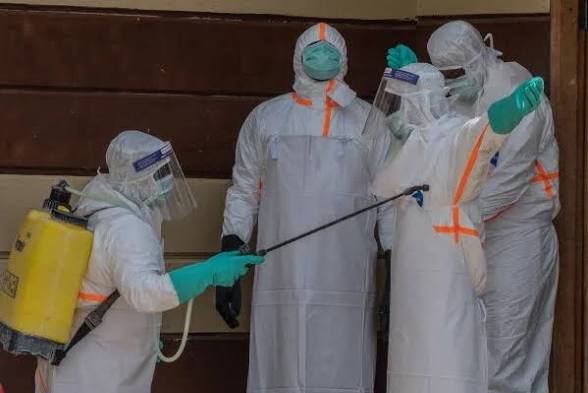
The Nigeria Centre for Disease Control and Prevention (NCDC) has reported two suspected cases of Ebola Virus Disease (EVD), with one confirmed case, as the Federal Government intensifies efforts to contain the outbreak in the Federal Capital Territory (FCT).
Director-General of the NCDC, Dr Jide Idris, disclosed this while briefing journalists on the situation, explaining that the two suspected cases were recorded in the FCT and Rivers State, respectively, but the suspected case in Rivers State tested negative.
He said the confirmed case remained the only confirmed infection in the country, with 53 primary contacts identified and categorised for follow-up as part of ongoing contact-tracing activities.
According to him, the contacts include: healthcare workers, domestic staff and individuals who may have been exposed to the confirmed patient, while public health teams are monitoring them for symptoms.
Idris said the national incident management system had been activated to coordinate response activities involving the Federal Ministry of Health and Social Welfare, the NCDC, FCT health authorities, other relevant government agencies and technical partners.
He assured Nigerians that the government was committed to containing the outbreak, adding that experienced personnel and established public health systems had been deployed to prevent further transmission.
“Ebola is a serious disease, and we are handling the situation with the urgency it deserves. We have a clear response plan, experienced personnel and an established public health system that have been deployed to break Ebola transmission,” he said.
The NCDC boss explained that contact tracing remained a critical component of the response, noting that the number of contacts could change as investigations progressed and additional information became available.
He urged Nigerians identified as contacts to cooperate with public health officials by providing accurate information about their movements, contacts and any symptoms they might have experienced.
“Being identified as a contact does not mean that you have Ebola. It means that public health teams need to assess and monitor your health so that any possible infection can be identified early,” he stated.
Idris said contacts would be followed up for 21 days, corresponding to the maximum incubation period for Ebola, which ranges from two to 21 days after exposure.
He added that the government was strengthening clinical management and infection prevention and control measures in healthcare facilities, particularly in the FCT, to ensure that suspected cases were identified early, isolated safely and reported promptly to the relevant public health authorities.
He called on public and private healthcare facilities to review their infection prevention and control protocols, maintain a high index of suspicion for Ebola and ensure that healthcare workers had access to appropriate personal protective equipment.
Idris also disclosed that Nigeria had identified about 12 laboratories with the capacity to test for Ebola across the country, adding that laboratory readiness was being strengthened through the provision of additional reagents and consumables.
He said laboratory investigations and genetic sequencing were ongoing to provide further information about the virus and support the country’s response.
The NCDC director-general commended healthcare workers whose vigilance and clinical judgment contributed to the identification of the confirmed case, stressing that their safety and welfare remained priorities.
NCDC confirms patient’s condition improving, husband tests negative
Dr Idris said the condition of Nigeria’s confirmed Ebola patient has improved, while tests conducted on her husband returned negative.
Idris disclosed this while briefing journalists on the Federal Government’s response to the Ebola outbreak, explaining that investigations were ongoing to establish the patient’s travel history and determine possible sources of exposure.
He said the husband had been in contact with the patient and travelled with her to various locations, but tests conducted so far did not indicate infection.
“The husband has been with the wife. The husband is negative. They travelled together to various places, so the travel history is still unfolding to give us a clear picture,” he said.
The NCDC boss explained that investigators were examining travel documents and other relevant information to establish the patient’s movements before the infection was detected.
According to him, the patient arrived in Nigeria without symptoms, making it difficult to identify the infection immediately through routine screening.
“It was in reviewing the history that we started hearing about the case. Because she was symptomless, there was no way it could be tested at that point,” Idris said.
Plans to pay N100,000 allowance to 53 contacts in isolation
The NCDC has said it would pay allowance of N100,000 to 53 contacts of confirmed Ebola patients, who are in isolation, to ease the hardship associated with being separated from their families during the public health emergency.
Dr Idris disclosed this while briefing journalists and explained that the proposed financial support was being considered to address concerns raised by contacts over their welfare while complying with public health measures.
Idris said the decision was informed by the difficulties faced by individuals required to remain in isolation, including the disruption of their daily activities and separation from their families.
He explained that the agency had not initially promised the contacts stipends, but was considering providing financial support to reduce tensions and address their concerns.
“We did not promise them that money, but since we put them in for a change, we said, let us consider,” he said.
Expert seeks early diagnosis, comprehensive contact tracing
Dr Emmanuel Agogo, an international global health consultant, has called for early diagnosis, contact tracing and stronger cross-border surveillance to prevent further spread of Ebola Bundibugyo virus disease across Africa.
Agogo made the call in an interview with the News Agency of Nigeria (NAN) on Sunday, in Abuja.
His comments followed genomic findings showing that the virus detected in Nigeria’s imported case was closely related to that identified in Kenya’s first imported case.
Coordinating Minister of Health and Social Welfare, Professor Muhammad Ali Pate, announced the findings on October 23, noting that further investigations were needed to establish whether the two cases were epidemiologically linked.
The NCDC, in collaboration with the Institute of Genomics and Global Health at Redeemer’s University, Ede, Osun State, conducted the genomic analysis.
He said the findings provided an important clue for investigating how the virus reached Nigeria, although, genetic similarity alone did not establish direct contact between the two patients.
Climate patterns could help predict Ebola outbreaks —Study
Researchers have identified potential links between large-scale climate patterns and Ebola outbreaks in Africa, raising hopes that climate monitoring could help public health authorities anticipate periods of increased risk.
The study, led by the University of Málaga, in Spain, suggests that climate fluctuations occurring thousands of miles from Central Africa may provide early warning signals of environmental conditions associated with Ebola outbreaks.
Published in Stochastic Environmental Research and Risk Assessment, the research analysed 49 Ebola outbreaks recorded across Africa between 1976 and 2025, comparing their timing and distribution with 26 climate oscillation indices.
The international research team included scientists from the Spanish Institute of Oceanography, Manchester Metropolitan University and the Centre for International Forestry Research (CIFOR).
The researchers identified four climate indices associated with Ebola outbreak patterns: the Caribbean Sea Surface Temperature Index, the Dipole Mode Index, the Quasi-Biennial Oscillation and the Pacific Decadal Oscillation.
The Pacific Decadal Oscillation emerged as the most prominent indicator in the study’s model.
According to the researchers, large-scale climate fluctuations may influence regional weather patterns, including rainfall across Africa. These changes could affect ecological conditions and interactions between wildlife and humans, potentially influencing the likelihood of zoonotic disease outbreaks.
Raimundo Real, a professor of zoology at the University of Málaga and a co-author of the study, explained that climate oscillations may alter weather patterns and subsequently affect environmental conditions associated with outbreaks.
For Advert, Event Coverage/Press Conference Invite, Story/Article Publication & Other Media Services
Contact Us On WhatsApp
Send Email To: citizennewsng@gmail.com
Visit Citizen NewsNG To Read More Latest And Interesting News Across Nigeria And The World¹