






Middle East Crisis May Cut Africa’s Growth By 0.2% – Report | Citizen NewsNG
 Citizen NewsNG
3 min read
Citizen NewsNG
3 min read
The African Development Bank Group (AfDB) said this in a statement released on its website on Friday.
The report, presented in Washington, D.C., was jointly produced by the African Union Commission(AUC), AfDB, United Nations Economic Commission for Africa(ECA) and United Nations Development Programme(UNDP).
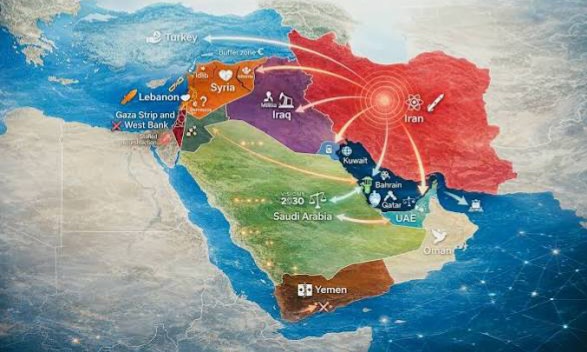
Titled “Impacts of the Conflict in the Middle East on African Economies,” the report warned that Africa’s fragile recovery from global shocks could be undermined by the conflict.
It noted that African economies were still recovering from the effects of the COVID-19 pandemic, the Russia–Ukraine war and rising global trade tensions.
The report was presented by Mr Kevin Urama, Chief Economist and Vice President for Economic Governance at the AfDB, on the sidelines of the IMF and World Bank Spring Meetings.
Urama highlighted the strategic importance of the Strait of Hormuz, noting that its closure had significant implications for global transport and trade.
According to him, the crisis has triggered rising prices of hydrocarbons, food and fertilisers, while disrupting global supply chains and increasing volatility in capital and foreign exchange markets.
Mr Claver Gatete, Executive Secretary of the ECA, said Africa remained highly exposed to developments in the region.
“Eighty per cent of the oil imported into Africa comes from this region, as well as 50 per cent of refined petroleum,” he said.
Gatete added that about 31 African countries were already experiencing currency depreciation as a result of the shocks.
Ms Francisca Belobe of the African Union Commission said the report underscored Africa’s resilience in the face of global crises.
To mitigate the impact, the report urged African governments to adopt prudent fiscal and monetary policies, including strategic inflation management and strengthened debt monitoring.