






 Citizen NewsNG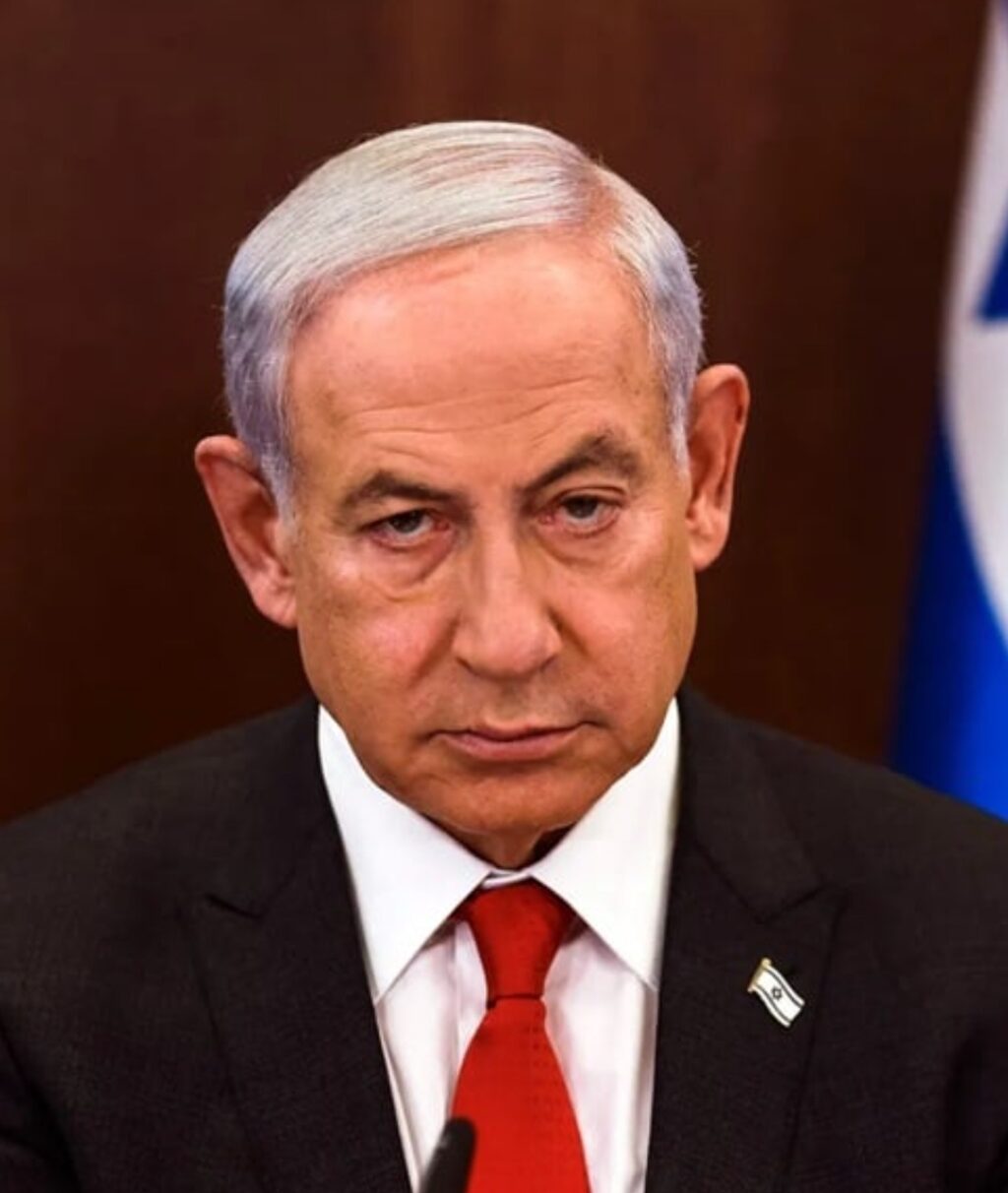
Muslim leaders on Netanyahu Israeli Prime Minister, Benjamin Netanyahu
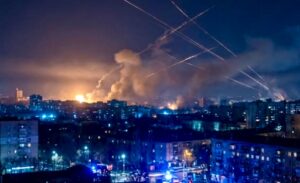
Israel has carried out airstrikes in southern Lebanon after ordering people to evacuate about 20 locations, according to the Lebanese state media.
The Lebanese National News Agency said that at least one person was killed after a strike on the town of Marrakeh in Lebanon’s Tyre district.
Isreal’s prime minister had previously warned to strike Hezbollah if the attacks on northern Israel continues.
The strikes occurred as Pakistan’s prime minister, Shehbaz Sharif is meditating talk between the US and Iran.
He wrote on X ,“We are closer to a peace deal than ever before”.
“Finalisation is likely expected in the next 24 hours,” he added.
The Iran’s foreign minister, Seyed Abbas Araghichi had earlier said that a deal to end the US-Iran conflict is close. The agreement also entails an ending to the Israel and Labanon conflict.
Araghchi told state TV that the deal includes reopening the Strait of Hormuz and lifting of a US blockade of Iran.
He furthered said that talks on Iran’s nuclear programme would begin later.
However, the US officials have confirmed some of the details of the agreement and insisting that economic benefits for Iran depends on meeting its own obligations.
Iran has repeatedly insist that Labanon might not be part of the deal as previous reports from US also suggested such.
The war began on February 28, with US and Israeli striking across Iran’s domine. This prompt Iran to attack Israel and US allied states in the Gulf as well as effectively closing the Strait of Hormuz, a key shipping route for the world’s oil and liquefied natural gas.
Despite having agreed a ceasefire in April, the US and Iran have exchanged intermittent fire, including two rounds of tit-for-tat strikes this week.
The US President, Donald Trump said on Thursday that he had cancelled scheduled attacks against Iran, because negotiators “just made a great settlement”.
According to him, the deal was likely to be signed imminently.
On Friday, Iranian media published some details from the alleged 14-point deal which Trump said had “nothing to do with the terms that were agreed to” and “bears no relation to the truth”.
The Pakistan’s prime minister said after a few hours that the Memorandum of Understanding (MOU) between the US and Iran had been agreed and awaited finalising.
On Saturday, Sharif wrote on X that his country “is preparing for the electronic signing of the peace deal, which was followed by technical level talks next week”.
Iran’s Araghchi was quoted in state media saying there are “supporters and opponents” of the latest terms of the deal among Iran’s top security body, the Supreme National Security Council.
However, he added that a collective decision had not been reached.
“For now, we must wait. If approved, the agreement will be signed remotely,” he said.
Israel does not involved in the talks which are meant to lead to an extension of the ceasefire and the start of negotiations on key issues, including Iran’s nuclear programme.
For decades, Iran has been accused by Western countries of trying to build a nuclear weapon. It has denied the accusations, saying its programme is for peaceful purposes, which is to generate electricity and for research purposes.
In a detailed briefing with journalists on Friday afternoon, US officials said the deal would reopen the Strait of Hormuz, in return for the US lifting its blockade on Iranian shipping.
Those steps would come into effect more or less immediately. This would be followed by a 60-day period of negotiation, focusing on Iran’s enriched uranium, an essential ingredient to make a nuclear bomb.
Officials said that this would result in all that material being destroyed on site and then removed from the country, though the precise mechanism for doing so is still to be worked out.
On the economic side, officials stressed that there would be no money provided up-front, an apparent rejection of earlier Iranian news reports suggesting some Iranian assets would be unfrozen before substantial negotiations had begun.
US officials has instead said that there would be a staged reintegration of Iran into the global economy, with measures such as the lifting of sanctions and the potential unfreezing of assets happening incrementally.
The deal calls on Iran to stop funding proxy groups in the region, a reference to Hezbollah and other Iranian proxies across the Middle East.
The US officials emphasised that the MOU was not based on trust or promises, but on “performance”.
Iran would only receive economic benefits when it could be verified it had implemented measures it had committed to.
Even though there is a sense of cautious optimism from all sides. The US, Iran, Pakistan and Qatar which has also helped with mediation efforts said that there is still a small distance to go.
Variations of this agreement have been expected several times over the past month or two, only to fall away at later stages.
The difference now, according to the US administration, is both a greater level of optimism and a greater openness about the substance of the agreement.
For his part, the Iranian foreign minister said that “as soon as the final stages of our negotiations are completed, this agreement will be signed and announced”.
“This could happen in the coming days. I am very hopeful,” Araghchi told state TV.
He stressed that the first point mentioned in the MOU was the lifting of the US naval blockade of Iran.
As for the Strait of Hormuz, the crucial waterway through which some 20% of the world’s oil and liquefied natural gas normally transits, Araghchi said the administration would “no longer be the same as before”.
Since closing the Strait, Iran has insisted on a fee to be paid by vessels seeking to cross, with the US insisting passage should be free to all shipping.
For Advert, Event Coverage/Press Conference Invite, Story/Article Publication & Other Media Services
Contact Us On WhatsApp
Send Email To: citizennewsng@gmail.com
Visit Citizen NewsNG To Read More Latest And Interesting News Across Nigeria And The World