








 Citizen NewsNG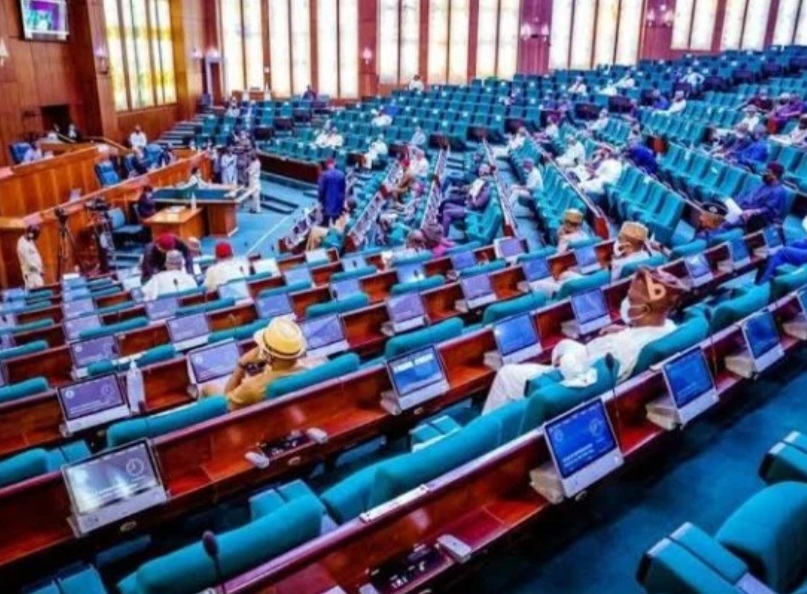
Members of the Special Ad-hoc Committee of the House of Representatives Committee on Constitution Review are expected to convene on Monday to deliberate on the State Police Bill initiated by President Bola Tinubu.
The bill seeks to provide for comprehensive transition framework for the establishment of State Police and prescription of national minimum policing standards in Nigeria.
The Special Ad-hoc Committee chaired by Hon. Benjamin Kalu is expected to debate on the bill which consists of 26 clauses which passed through Second Reading in on Tuesday, 14th July, 2026.
Recall that the House via a motion sponsored by the Chairman, House Committee on Rules and Business, Hon. Francis Waive, reversed the State Police bill passed on Thursday, 11 June, 2026.
In his lead debate, Hon. Waive observed that on Thursday, 9 July, 2026, a Twelve-Member Conference Committee was constituted to harmonise the decisions of both Chambers on the State Police Services.
The Executive legislative proposal seeks to amend several sections of the 1999 Constitution to create a dual policing system, with the Federal Police Service retaining responsibility for federal policing while states establish and operate their respective police services.
It also provides for the creation of State Police Service Commissions to oversee the appointment, discipline and administration of personnel at the state level.
According to the 26 clauses proposed by the Presidency, the Executive bill seeks to amend Sections 84(4), 89(2), 121(3b) by inserting a new subsection (3c), 124(4), 129(2), 153(1), 157(2), 158(1), 160 by inserting immediately after subsection (2) a new subsection (3), 197(1), 201(2) and 204.
It further seeks to amend Chapter VI Part III of the 1999 Constitution, deletion and substitution of Section 214, 215, 216, Second Schedule of the 1999 Constitution, Part I of the Third Schedule of the 1999 Constitution, Part III of the 1999 Constitution, Part III of the Fifth Schedule of the 1999 Constitution, Section 318(1), respectively.
As indicated in the explanatory memorandum of the legislative framework, the bill seeks to “preserves the Federal Police Service as the default police service in any State until a State Police Service is lawfully established and certified operational, and preserves the continuing federal policing role in every State and in the Federal Capital Territory, Abuja.
“The Bill establishes constitutional guardrails for civilian control, human rights, national minimum standards, independent police service commissions, intergovernmental cooperation, criminal information systems, firearms control, and exceptional federal intervention in State policing in cases of breakdown, serious incapacity, national security threat, or egregious abuse.”
The Bill however leaves the detailed organisation, procedures, operational control, certification, complaints mechanisms, grants, and implementation arrangements to subsequent Acts of the National Assembly and, where applicable, to the Laws of the Houses of Assembly of States.”
The Executive Bill was designed to strengthen Nigeria’s security architecture by constitutionally defining the respective roles of the Federal Police Service and State Police Services while prescribing national minimum policing standards.
It further amends the definition of the public service of the Federation and the states by replacing references to the Nigeria Police Force with the Federal Police Service and recognising members and staff of State Police Services and State Police Service Commissions as part of the public service.
The Bill further proposed that the Inspector-General of the Federal Police Service may be removed from office by the President acting on an address supported by a two-thirds majority of the Senate on the grounds of misconduct, incapacity or gross violation of the Constitution. Similarly, a State Commissioner of Police may be removed by the Governor upon an address supported by a two-thirds majority of the State House of Assembly on the same grounds. The provision is intended to strengthen accountability while protecting the operational independence of the leadership of both the Federal Police Service and the proposed State Police Services.
The Executive Constitution Alteration Bill proposes replacing Section 214 of the Constitution to establish a Federal Police Service for the Federation and a State Police Service for each state. However, a State Police Service can only commence operations after it has been established by a law of the State House of Assembly and certified as meeting national minimum policing standards prescribed by an Act of the National Assembly. Until then, the Federal Police Service will continue to carry out policing functions in the affected state. Even after a State Police Service becomes operational, the Federal Police Service will retain responsibility for federal policing duties and may assist state police when necessary.
Barring last minute changes, the Special Ad-hoc Committee is expected to present its report on the floor of the House on resumption for plenary for further legislative action.
For Advert, Event Coverage/Press Conference Invite, Story/Article Publication & Other Media Services
Contact Us On WhatsApp
Send Email To: citizennewsng@gmail.com
Visit Citizen NewsNG To Read More Latest And Interesting News Across Nigeria And The World