







Federal Govt Activates 1,400 Primary Healthcare Centres Across Nigeria | Citizen NewsNG
 Citizen NewsNG
5 min read
Citizen NewsNG
5 min read

The Federal Government has activated more than 1,400 primary healthcare centres (PHCs) across Nigeria to provide primary eye care services as part of efforts to expand access to vision screening, early detection, and the treatment of common eye conditions.
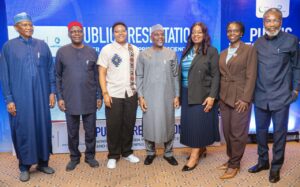
The Minister of State for Health and Social Welfare, Dr Iziaq Adekunle Salako, disclosed this on Thursday in Abuja during his address at the 2026 World Sight Day commemoration, themed “Love Your Eyes”, with the sub-theme, “Protect Your Vision, See Clearly, Live Fully.”
Salako, who was represented by the Director of the eHealth Division in the Federal Ministry of Health and Social Welfare, Dr Doris Afam-Aneke, said the government treats avoidable blindness and visual impairment as both a public health and development challenge.
He stated that integrating primary eye care into the primary healthcare system has significantly expanded the capacity of frontline facilities to prevent, detect, and manage common eye conditions while ensuring timely referrals for patients requiring specialised interventions.
“A critical component of this success has been the training of over 3,000 healthcare workers across 16 states, equipping them with the competencies required to provide essential eye care services within their communities, as well as activating over 1,400 primary healthcare centres to provide primary eye care services across the country,” he said.
According to him, these investments are already improving early detection, increasing community awareness, facilitating prompt referrals, and reducing the burden of preventable visual impairment.
Salako noted that the benefits of primary eye care extend beyond the health sector to education, productivity, and national development, describing prevention and early intervention as being among the most cost-effective and equitable investments for protecting Nigerians’ vision.
He also revealed that more than 1.5 million pairs of reading spectacles had been distributed to Nigerians across 16 states through the Effective Spectacle Coverage Initiative Nigeria, known as Jajibola 2.0.
He added that preparations are well underway to launch the initiative in 10 additional states, furthering efforts to bridge service gaps and improve equitable access to vision correction.
The minister stated that the government, with support from partners, has screened more than 1.5 million school-age children for visual problems through the School Eye Health Programme, with most of those requiring intervention linked to appropriate care.
On secondary eye care, Salako announced that four additional vision centres are being established within secondary healthcare facilities across Enugu, Edo, Sokoto, and Nasarawa states.
He explained that these centres will expand service capacity, improve refractive error services, strengthen referral pathways, and increase access to quality eye care across the entire continuum.
Salako further announced the government’s commitment to performing 25,000 free cataract surgeries across the country by the end of 2027 under the Renewed Hope Health Connect initiative.
Describing cataracts as the leading cause of avoidable blindness in Nigeria, he emphasized that it is unacceptable for citizens to continue experiencing blindness from a condition that has an effective treatment.
“Cataract surgical services remain a key priority within our national eye health agenda. Today, I reaffirm our commitment. As part of our Renewed Hope Health Connect, we are embarking on performing 25,000 free cataract surgeries across the country by the end of 2027,” he said.
Earlier, the National Coordinator of the National Eye, Ear and Sensory Functions Health Programme, Dr Oteri Okolo, said Nigeria has made significant progress in transforming eye health from a largely fragmented, urban-centred service into a national priority.
Okolo noted that the country has developed its maiden Comprehensive National Eye Health Policy—ratified by all 36 states and the Federal Capital Territory—as well as the National Strategic Eye Health Plan 2024–2028.
She reported that more than 800 PHCs have been activated and over 2,200 frontline primary healthcare workers trained in primary eye care under the national programme.
Okolo added that more than 80 per cent of visual impairment cases in Nigeria are avoidable, making prevention, early detection, and timely treatment essential to reducing the country’s burden of blindness.
Going forward, she said the programme is focusing on three major areas: integrating primary eye care into PHCs nationwide, strengthening financial protection through health insurance, and integrating eye health indicators into the national DHIS2 platform.
According to her, millions of Nigerians in rural areas, urban slums, and other hard-to-reach communities still face long journeys and high out-of-pocket costs to access basic eye care.
The Executive Secretary of the National Commission for Persons with Disabilities, Chief Ayuba Burki Gufwan, stated that protecting vision is an investment in human dignity, productivity, independence, and national development.
Gufwan urged that persons with disabilities be placed at the centre of eye health interventions, citing inaccessible facilities, communication barriers, limited information, and inadequate consideration of their specific needs as persistent challenges.
Sightsavers Nigeria Country Director, Prof Joy Shuaibu, noted that millions of Nigerians continue to live with avoidable vision loss despite the availability of effective and affordable interventions.
She urged stakeholders to ensure equitable, affordable, inclusive, and high-quality eye care for every Nigerian.
The Country Director of the Clinton Health Access Initiative Nigeria, Dr Olufunke Fasawe, pointed out that more than 24 million Nigerians live with uncorrected presbyopia, identifying distance from eye clinics and over-reliance on sporadic charitable outreaches as major barriers to sustained eye care.
Fasawe explained that over the past two years, CHAI and the national eye health programme have provided reading glasses to more than one million people through the primary healthcare system, with the initiative now being expanded to 11 additional states.
CBM International Country Director for Nigeria, Omoi Samuel, commended the government’s efforts to strengthen eye health and called for increased attention to underserved communities, particularly children, women, and persons with disabilities.
Head of the Africa Chapter at the OneSight EssilorLuxottica Foundation, Mustapha A. Njie, reaffirmed the foundation’s commitment to expanding access to vision care, while Peek Vision’s Head of Global Partnerships, Farhana Rehman-Furs, noted that technology and data are being deployed to bring vision screening closer to schools and communities.
Senior Director at the Helen Keller International Nigeria Country Office, Aliyu Mohammed, also called for increased investment in preventive eye care and equitable access to quality vision services.
For Advert, Event Coverage/Press Conference Invite, Story/Article Publication & Other Media Services
Contact Us On WhatsApp
Send Email To: citizennewsng@gmail.com
Visit Citizen NewsNG To Read More Latest And Interesting News Across Nigeria And The World